
Last updated November 23, 2026
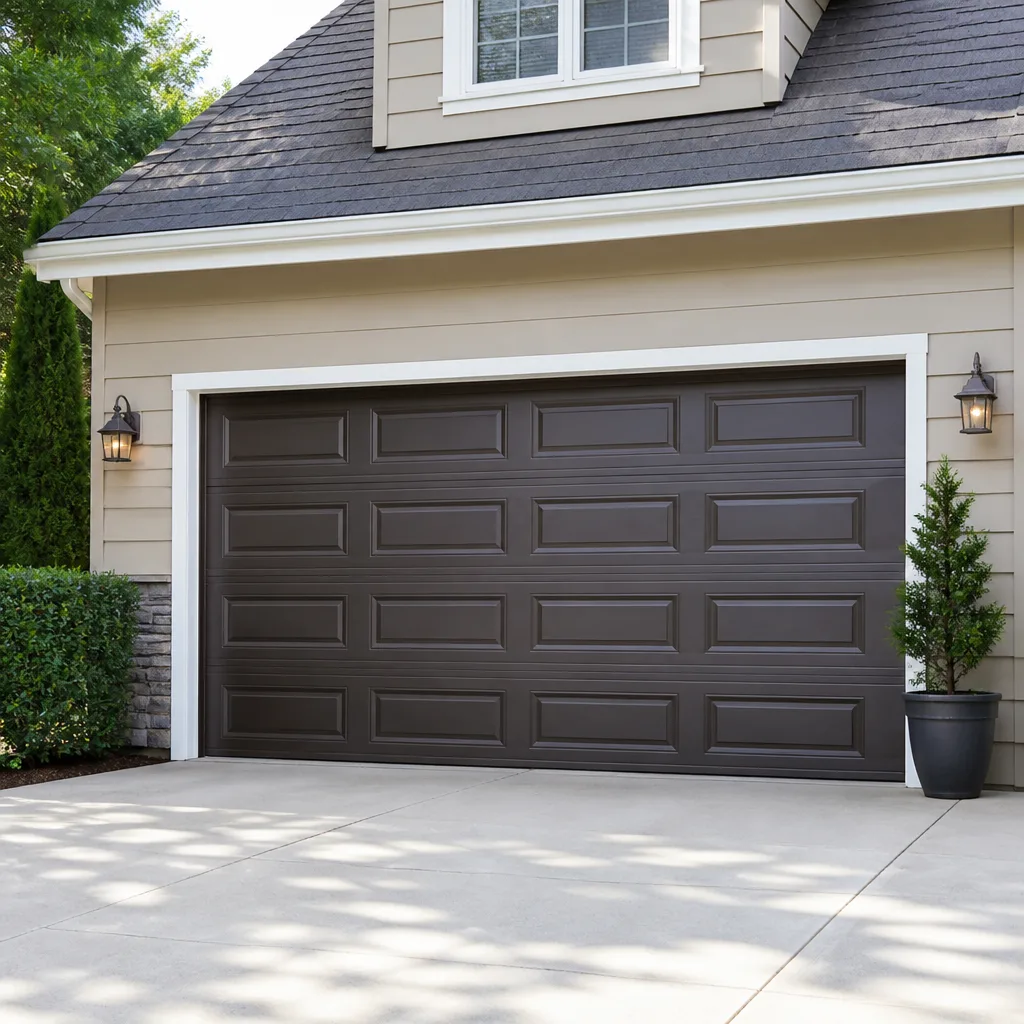 Raised-panel steel
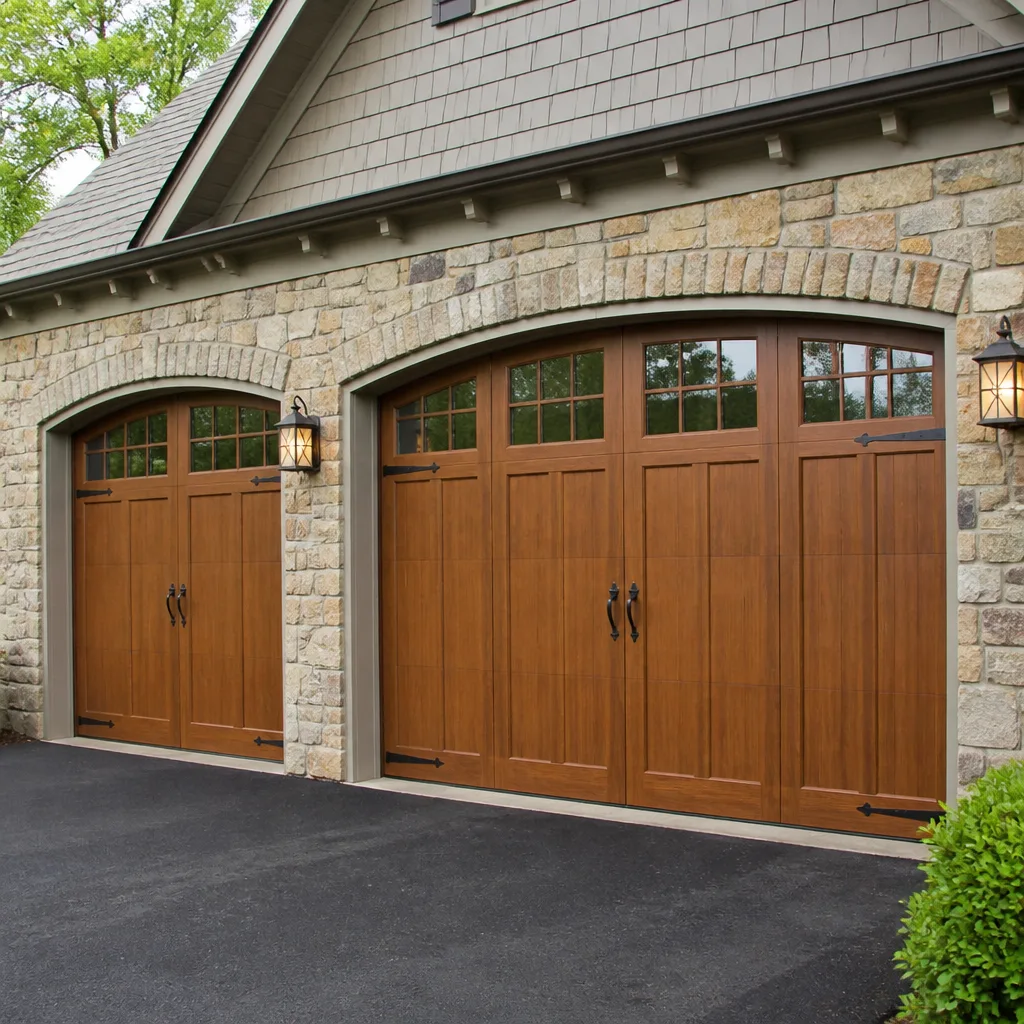 Carriage house
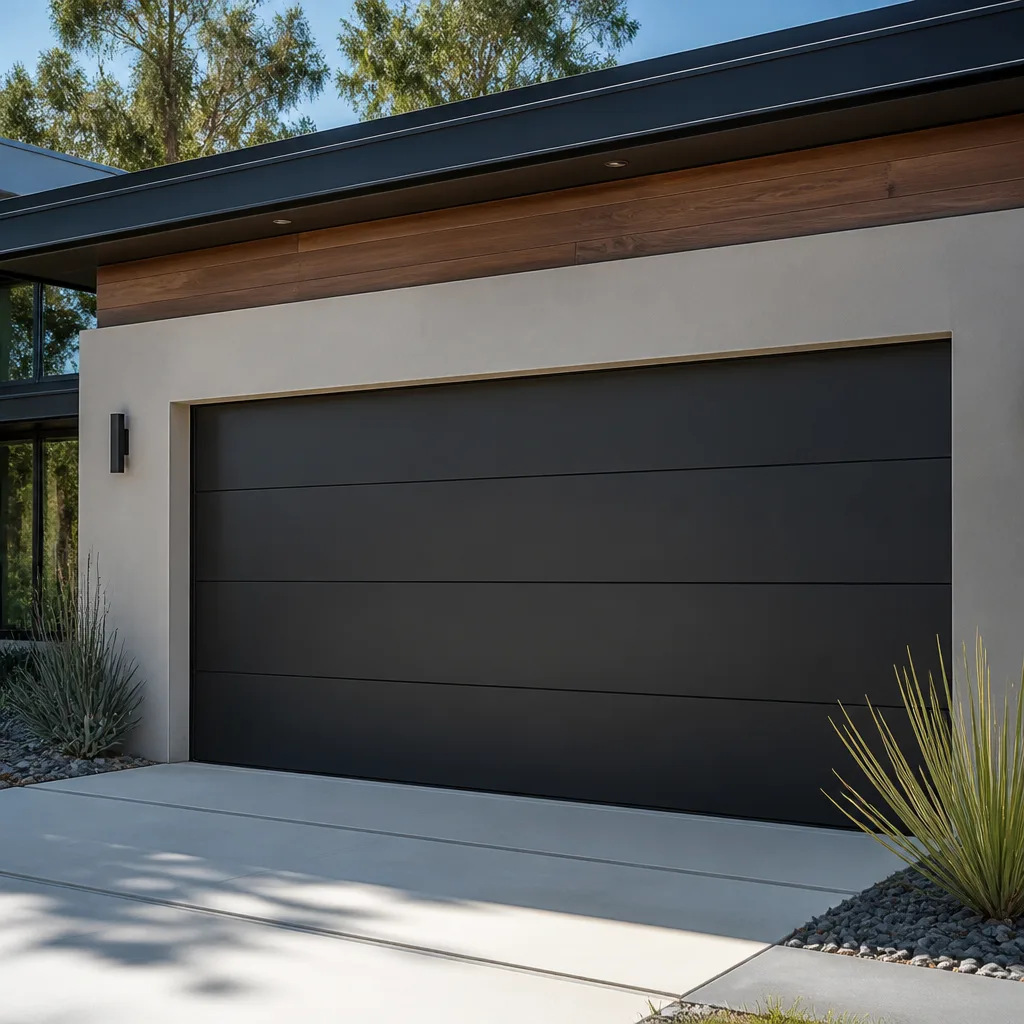 Modern flush
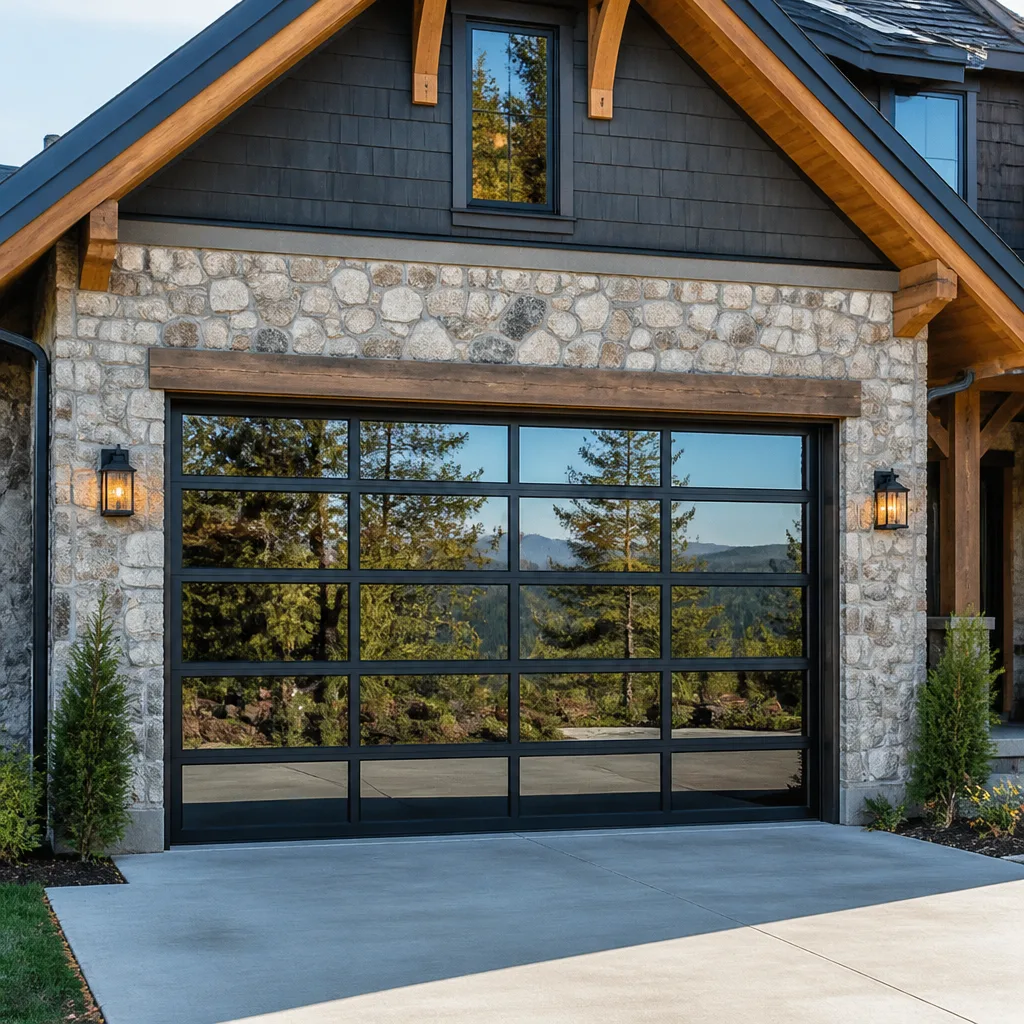 Full-view glass
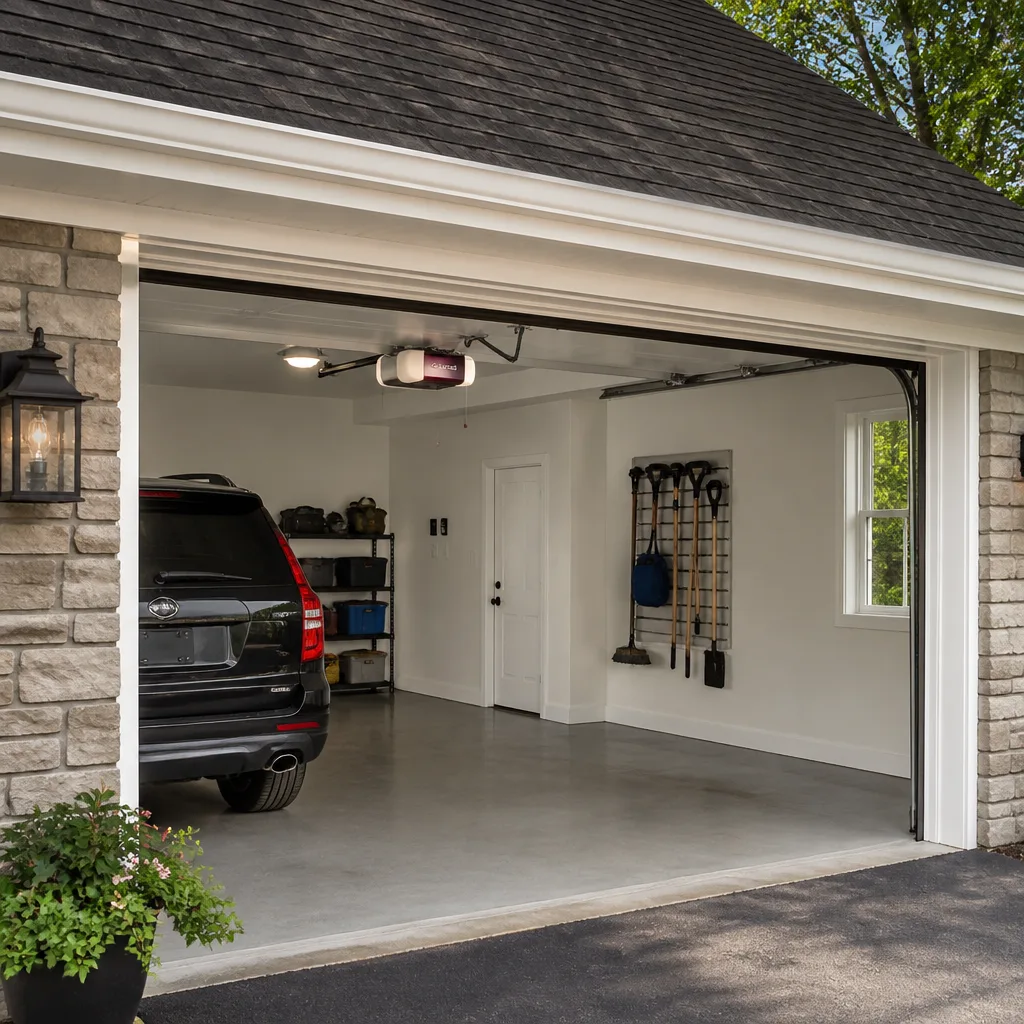 LiftMaster openers
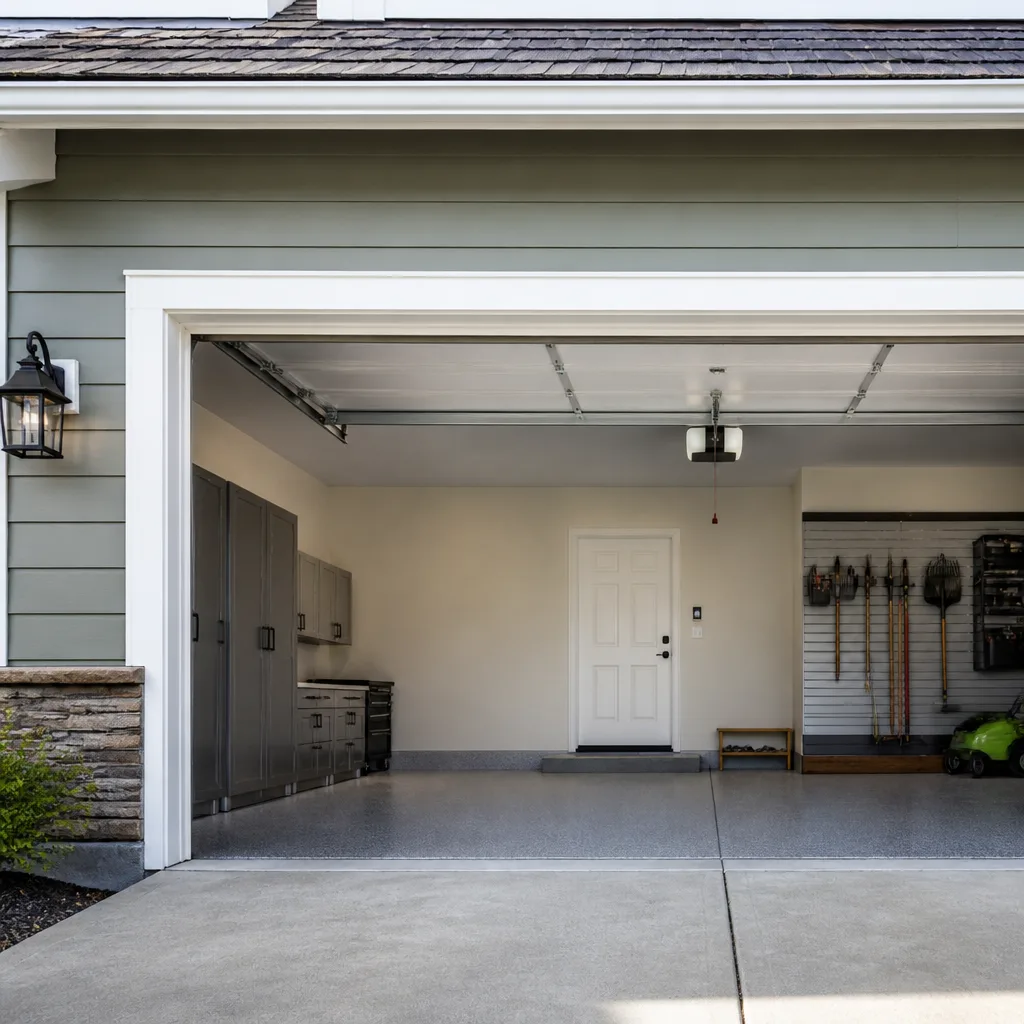 Chamberlain openers
Full 25-point door and opener safety check with every visit - springs, cables, rollers, tracks, and your LiftMaster or Chamberlain opener included
You get a price before we start. It does not change when the pro arrives.
Get your free estimateThe Complete Guide to Garage Doors in Lakewood
Most Lakewood garages were built before the standard 9-foot door width existed. If you’ve ever bought a “standard” door and had it not fit, that’s why. The city’s housing stock went up largely between 1920 and 1960, when builders worked from pattern books and lot lines rather than national catalogs, and the garages that came with those houses reflect it: narrow openings, odd spring layouts, detached structures with framing that predates modern hardware. A buying guide written for a new-build subdivision will steer you wrong here. This guide covers what actually matters in a Lakewood garage: measuring a vintage opening correctly, choosing materials that survive Lake Erie moisture and freeze-thaw cycles, and knowing when a 1940s wood jamb can carry a modern torsion system and when it can’t.
Quick Answer
Garage doors in Lakewood need to be measured, not assumed. Openings in the city’s older homes are frequently 8 feet wide or irregular rather than the modern 9-foot standard, and many are attached to detached garages with framing that needs reinforcement before a modern opener or torsion spring can be mounted safely. The right door for a Lakewood home is one sized to the actual opening and finished to handle lake-effect humidity and repeated freeze-thaw, not the closest stock size on a showroom floor.
Styles & brands we work with
- Raised-panel steel
- Carriage house
- Modern flush
- Full-view glass
- LiftMaster openers
- Chamberlain openers
Table of Contents
- Why Vintage Lakewood Openings Rarely Match Standard Sizes
- Detached Garages: The Structural Differences That Matter
- Which Door Materials Hold Up to Lake Erie Weather
- Brand Options for Tight and Irregular Openings
- Can a 1940s Wood Jamb Support a Modern Torsion System?
- Choosing an Opener for an Older Garage
- Repair or Replace: How to Decide
- What Garage Door Work Typically Costs in Lakewood
Why Vintage Lakewood Openings Rarely Match Standard Sizes
An 8-foot-wide opening is the single most common surprise we run into in Lakewood. The 9-foot door became the residential default later than most homeowners assume, and the houses built here between 1920 and 1960 went up before that convention hardened. A single-car garage from that era may measure 8 feet across, or 8 feet 2 inches, or something a tape measure puts between the two. None of those are defects. They’re just older than the standard.
The problem starts when a homeowner orders a replacement based on the nominal width of the old door rather than a real measurement of the opening. Doors are not forgiving of an inch. A unit that’s too wide won’t seat in the track; one that’s too narrow leaves gaps at the jamb that let in weather and insects, and the hardware won’t line up cleanly.
Here’s how a correct measurement works on an older Lakewood garage:
- Measure the clear opening width at the widest point, inside jamb to inside jamb, not the outside of the trim.
- Measure the height from the finished floor to the bottom of the header, at both ends. Floors in older garages are rarely perfectly level, and the shorter measurement governs.
- Measure the headroom above the opening, from the top of the header to the ceiling. Torsion springs need clearance; low-headroom setups need different hardware or a low-clearance track.
- Measure the side room on each side of the opening, since vertical track and springs need space to sit.
- Check whether the opening is square. A diagonal measurement corner to corner, compared on both sides, tells you how far out of true the frame has drifted.
That fifth step is where a lot of older Lakewood garages fail the test. Settlement, repeated frost movement and decades of settling hardware leave openings slightly out of square, and a door installed into an out-of-square opening binds, wears its rollers and eventually comes off track. Measuring is the part where experience earns its keep.
Detached Garages: The Structural Differences That Matter
Detached garages are common across Lakewood’s older neighborhoods, and they change the technical picture in ways an attached-garage guide won’t tell you. The biggest difference is what’s overhead. In an attached garage, the opener and spring system hang from framing tied into the house. In a detached garage, everything depends on the garage’s own structure, and that structure is usually older, lighter and more likely to have been modified over the decades.
Three things need checking before new hardware goes up:
- Ceiling framing for the opener. Openers need a solid mounting point, usually a header or a reinforced cross-member. A single rafter or a piece of decking nailed across two joists isn’t enough, and an opener hung from it will vibrate, drift and eventually pull loose.
- Spring anchoring. Torsion systems put real load on the header above the door. Extension springs load the side jambs and the framing behind them. Either way, the wood carrying that load has to be sound, not soft or split.
- Track support. Detached garages are often unheated, and unheated structures move more with the seasons. Track brackets need to be anchored into framing that isn’t going anywhere.
Unheated detached garages also affect the door itself. A door that sits in an unheated structure all winter experiences the same temperature swings as the outdoors, and the panels, hinges and rollers flex with it. That’s normal. What isn’t normal is hardware that was specified for a conditioned space being installed into a structure that swings through a full northeast Ohio temperature range every year. Spring cycles, in particular, add up faster in a door that’s moving against cold, stiff tracks half the year.
If you’re not sure what your garage’s framing can carry, that’s a question for someone who looks at it rather than guesses. Our garage door repair work on older Lakewood structures starts with exactly that inspection.
Which Door Materials Hold Up to Lake Erie Weather
Lakewood sits close enough to Lake Erie that humidity and freeze-thaw cycles set the rules for door materials. The lake moderates temperature but feeds moisture into the air, and the ground here cycles between freezing and thawing repeatedly through winter. A door that performs fine in a dry climate can fail early here, and the failure is usually at the bottom, where the door meets slush, road salt tracked in from the alley and standing water.
How the common materials compare in this climate:
- Steel, insulated or not: The most common choice for good reason. Steel handles moisture well as long as the finish stays intact. Chips and scratches at the bottom edge are where rust starts, so a steel door in Lakewood wants its paint or factory finish touched up rather than left to fail.
- Aluminum: Doesn’t rust, which sounds ideal near the lake. But it dents more easily than steel, and older aluminum doors can corrode at the seams where dissimilar metals meet. Fine for some applications, less forgiving in a garage where bikes and ladders lean against the door.
- Wood and wood-composite: The traditional look many Lakewood homeowners want on an older home, and the material most vulnerable to the local climate. Solid wood needs consistent sealing, and the bottom rails absorb water. If you go wood here, plan on refinishing on a schedule, not when it looks bad.
- Vinyl and composite overlays: Good moisture resistance and a reasonable match for historic styles. Watch the weight; some composite doors are heavy enough to need upgraded springs.
- Fiberglass: Resists moisture and won’t dent like steel. Less common, but a solid option for a detached garage that’s unheated and damp.
Whatever the material, the bottom seal and the threshold are where Lakewood weather does its work. A worn bottom seal lets water and cold air under the door, and the resulting moisture sits against the lowest panel. Replacing a bottom seal is inexpensive and prevents a much larger problem.
Brand Options for Tight and Irregular Openings
The good news for Lakewood homeowners with an 8-foot opening or a slightly irregular frame is that the major manufacturers make doors in more than one size. You’re not stuck with whatever the warehouse stocks.
Clopay and Amarr both offer a range of widths that includes sizing for openings narrower than the 9-foot standard, and their dealer networks can specify a door to the actual measured opening rather than the nearest catalog size. Wayne Dalton’s product lines include models well suited to the lighter, low-headroom applications common in older detached garages. If your existing opener still works, Raynor and LiftMaster systems are widely supported and serviceable, which means a new door doesn’t automatically mean a new opener.
That last point matters more than it sounds. Homeowners sometimes assume a new door requires a full new system. In our experience it usually doesn’t. We work on the brand you already have, whether that’s a Craftsman opener from years back or a LiftMaster unit, and we’ll tell you plainly when the existing hardware can stay.
When you’re comparing options, ask these questions:
- Can this model be built to my measured opening width, not just the nearest standard size?
- What’s the headroom requirement, and does my garage have it?
- What spring system does this door use, and how does that interact with my framing?
- Is a matching bottom seal and threshold available for this model?
- Does the door’s weight stay within what my current opener or a replacement can handle?
Can a 1940s Wood Jamb Support a Modern Torsion System?
Sometimes yes, sometimes no, and the answer comes from looking at the wood rather than the calendar. A 1940s wood jamb isn’t automatically too old to carry a modern torsion spring. What matters is whether the framing around the opening is sound, straight and solidly anchored, and whether the load path from the spring’s anchor plate down into the structure is intact.
A torsion spring system concentrates real force at the center of the header, and the anchor plate has to transfer that force into framing that can take it. On a jamb from the 1940s, here’s what we check:
- Whether the wood is solid or has soft spots, splits or rot, particularly around existing lag screw holes.
- Whether the header is a single member or has been built up over the years, and whether any of the added pieces are actually carrying load.
- Whether previous hardware left the wood perforated enough that new fasteners won’t hold.
- Whether the jamb is plumb and the opening square after decades of settlement.
Where the wood is sound but thin, reinforcement is often the answer rather than replacement. A steel angle or a properly anchored center plate can spread the load into framing that’s still good. Where the header is soft or split, it needs to be repaired before any spring goes up.
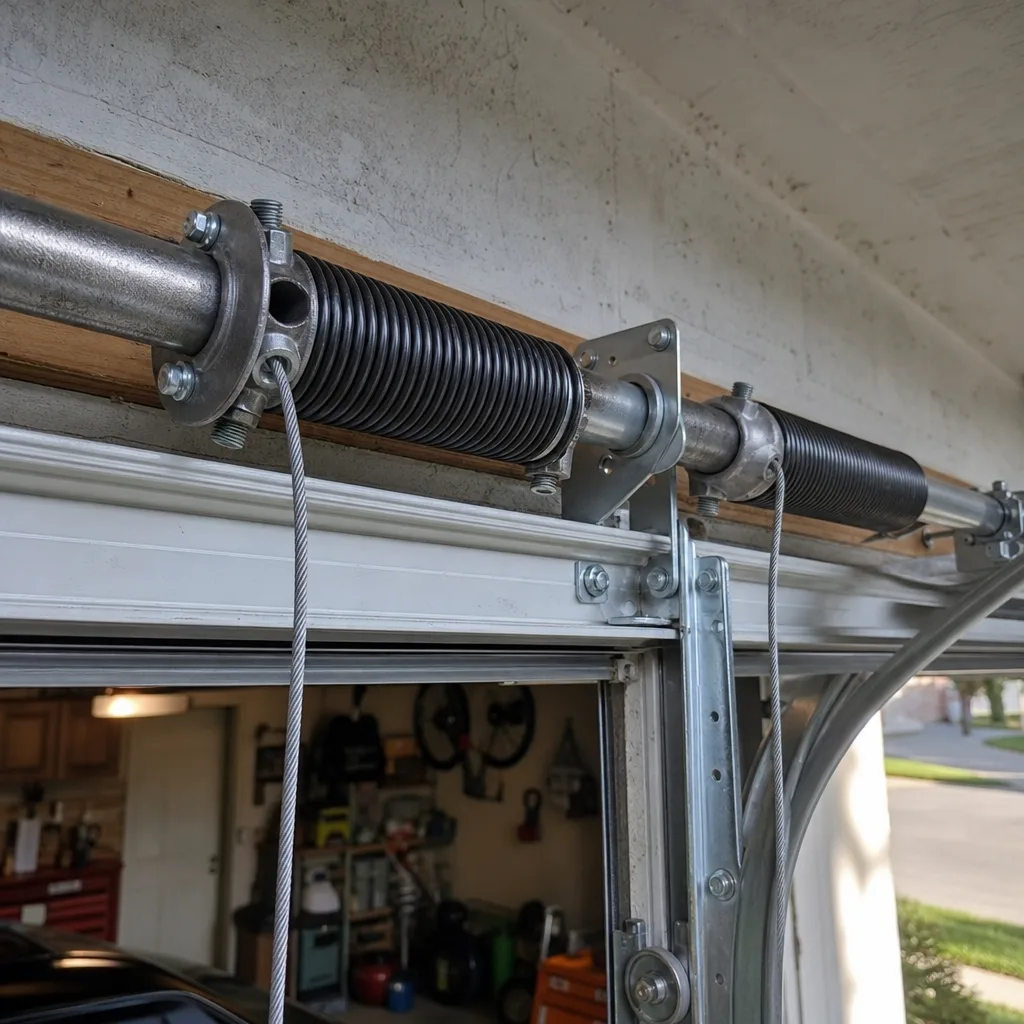
We want to be direct about the safety side of this. Torsion springs and their cables are under extreme tension, and the hardware holding them is not something to work on without the right tools and training. Cables, in particular, can whip if they’re cut or released incorrectly, and a spring that’s been wound by an untrained hand can fail catastrophically. This is the one part of garage door work where a mistake injures people. Our garage door spring repair work exists precisely because this isn’t a job for a homeowner with a wrench, and it’s the reason spring work is a specialty in its own right rather than a general handyman task.
If your garage has a wood jamb of uncertain vintage, have it looked at before you order hardware. It takes a few minutes to assess and it determines everything that follows.
Choosing an Opener for an Older Garage
The right opener for a Lakewood garage is the one that fits the door you have, not the one with the most features on the box. Older doors are often heavier than modern ones, tracks are sometimes not perfectly aligned, and headroom is frequently tighter than a modern installation assumes.
What to weigh:
- Lift capacity. A heavier vintage door needs an opener rated for it. An underpowered unit will strain, stall and wear out early.
- Headroom and clearance. Low-headroom garages may need a different track configuration before any opener goes in, and some openers are better suited to tight spaces than others.
- Control features. A battery backup matters more than people think in northeast Ohio, where winter storms can knock out power. Safety reversal is non-negotiable, especially in a household with children or pets.
- Support for the brand you have. If your existing opener is a LiftMaster, Chamberlain, Genie or Craftsman unit that’s otherwise healthy, repair may be the better call than replacement.
One thing we see often on older Lakewood garages: an opener that’s blamed for a door problem it didn’t cause. A door that binds, jerks or reverses may have a spring, track or roller issue, and a new opener won’t fix any of those. Proper garage door opener repair starts with diagnosing the door, then the operator.
Repair or Replace: How to Decide
Most garage door problems don’t need a new door, and the push toward replacement is one of the most common things homeowners run into. A door that won’t open, closes unevenly or makes noise is usually a hardware problem, not a door problem. The panels, tracks and framing may have plenty of life left.
Repair tends to be the right call when:
- The door structure is sound and the panels aren’t bent or rusted through.
- The problem is a spring, cable, roller, hinge or opener.
- The door is out of square but the opening isn’t.
- The bottom seal or threshold has failed but the door behind it is fine.
Replacement starts to make sense when the door itself is failing: panels that are bowed or rusted through, a wood door with rot that’s moved past the bottom rail, or repeated repairs on hardware that was never right for the opening. On a very old door with a mismatched size, a properly measured new door can solve problems that repair only postpones.
The honest answer is that the decision comes from looking at the door, the springs and the framing together. We’d rather tell you a door has years left in it than sell you one it doesn’t need. For repair work specifically, our Channing Garage Door Repair team diagnoses on-site and quotes before anything begins.
What Garage Door Work Typically Costs in Lakewood
Costs in Lakewood track the local labor market and the reality of older structures: jobs here often take longer than the same job in a newer subdivision because openings need measuring, framing needs checking, and hardware sometimes needs adapting. These are typical estimated ranges for the work, and the written estimate you receive sets the final price.
- Spring replacement, one torsion spring: typically $180 to $340. A matched pair is usually replaced together, so a pair runs roughly twice the single-spring figure.
- Opener repair: typically $95 to $250, depending on whether the fix is a sensor, gear, board or belt.
- Opener replacement, installed: typically $250 to $550, depending on lift capacity and features.
- Rollers, hinges and general tune-up: typically $85 to $200.
- Off-track or cable repair: typically $150 to $350, more if framing needs attention.
- New door installation, single-car: typically $900 to $2,500, depending on material and whether the opening is standard or custom-sized.
- New door installation, double-car: typically $1,500 to $4,000, with the same caveats.
Every price above is quoted and agreed before any work starts. If we find something during the job that changes the picture, we stop and talk to you before proceeding. Emergency and same-day calls are priced on the same basis as scheduled work; there’s no premium attached to urgency, and no surprise on the invoice.
If your opener has stopped responding and you’re not sure whether it’s a sensor, a board or the door itself, a quick call can save you a guess. We answer 24/7. A call outside dispatch hours is booked into the next opening, Sunday through Friday, 7am to 7pm.
Common Mistakes to Avoid
- Ordering a 9-foot door for an 8-foot opening. This is the most expensive version of the vintage measurement problem. Measure the actual opening, inside jamb to inside jamb, before ordering anything.
- Assuming a modern opener will hang in a detached garage as-is. Ceiling framing in older Lakewood detached garages often needs reinforcement before an opener goes up. Skipping that step leads to vibration, misalignment and an opener that pulls loose.
- Treating spring repair as a general handyman job. Torsion springs and cables are under extreme tension and need the right tools and training. This is the part of the job where people get hurt.
- Ignoring the bottom seal. In a climate with Lake Erie moisture and freeze-thaw cycles, a failed bottom seal lets water sit against the lowest panel. It’s a cheap fix that prevents an expensive one.
- Choosing wood without planning to maintain it. Wood doors suit Lakewood’s older architecture, but they need regular sealing here. A wood door left unsealed in this climate fails at the bottom rail first.
- Replacing an opener when the door is the problem. If a door binds or reverses, the fault is often in the springs, tracks or rollers. A new opener over a bad door just wears out faster.
- Assuming the door needs replacing when the hardware doesn’t. Most garage door failures are hardware failures. Get the door assessed before committing to replacement.
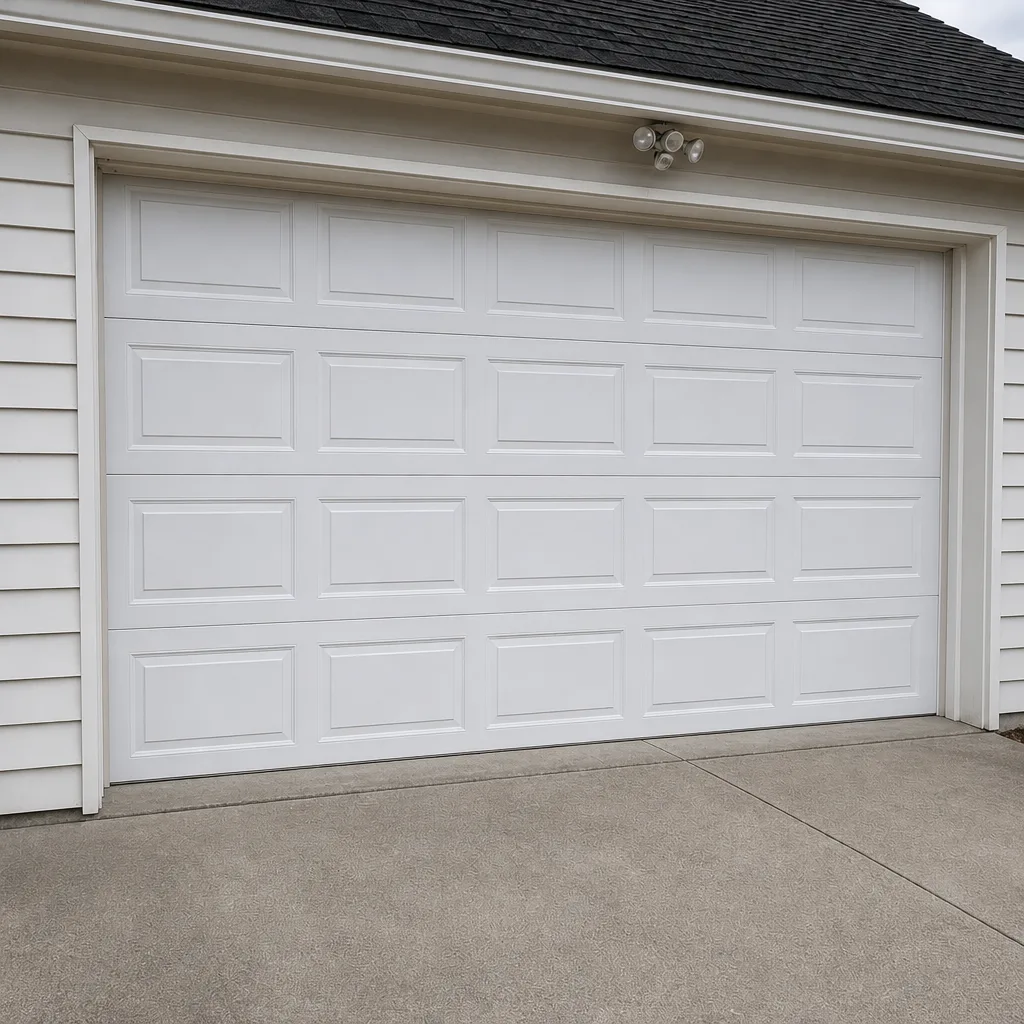
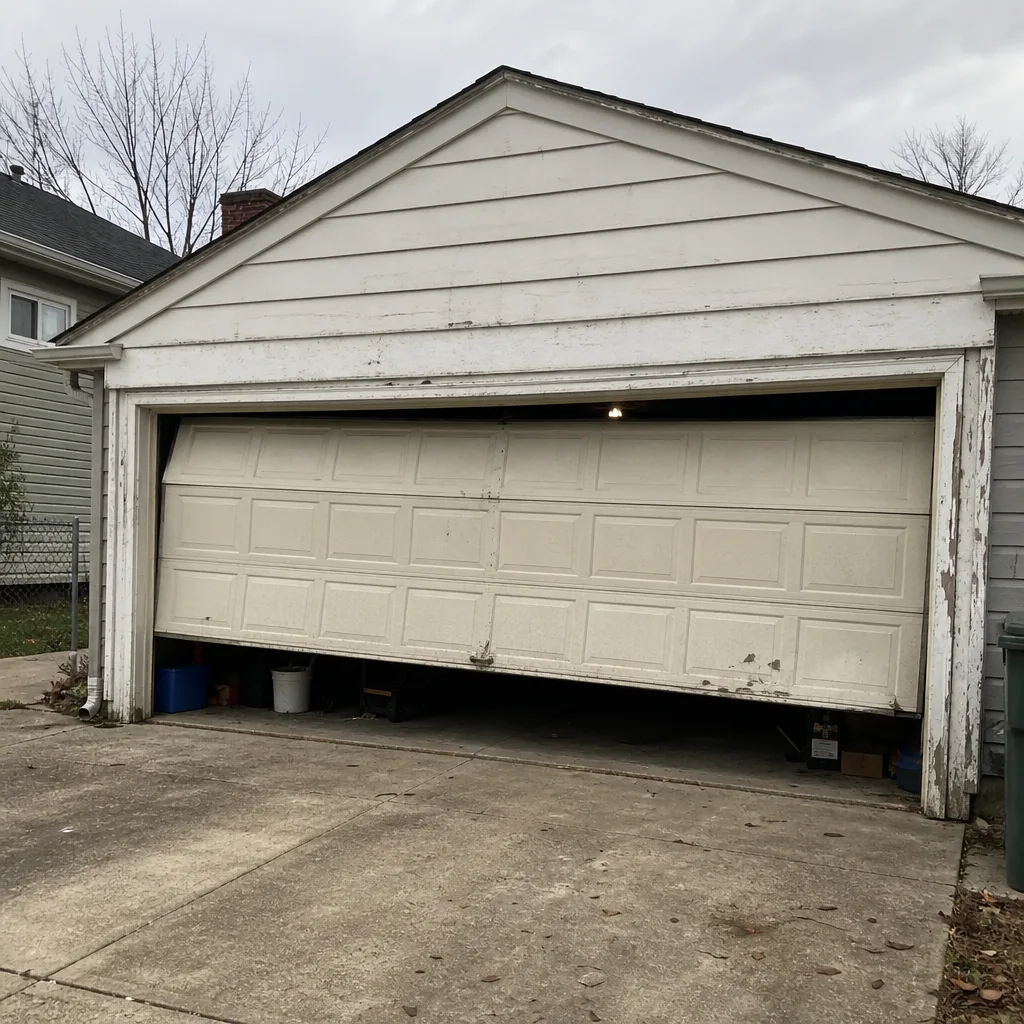
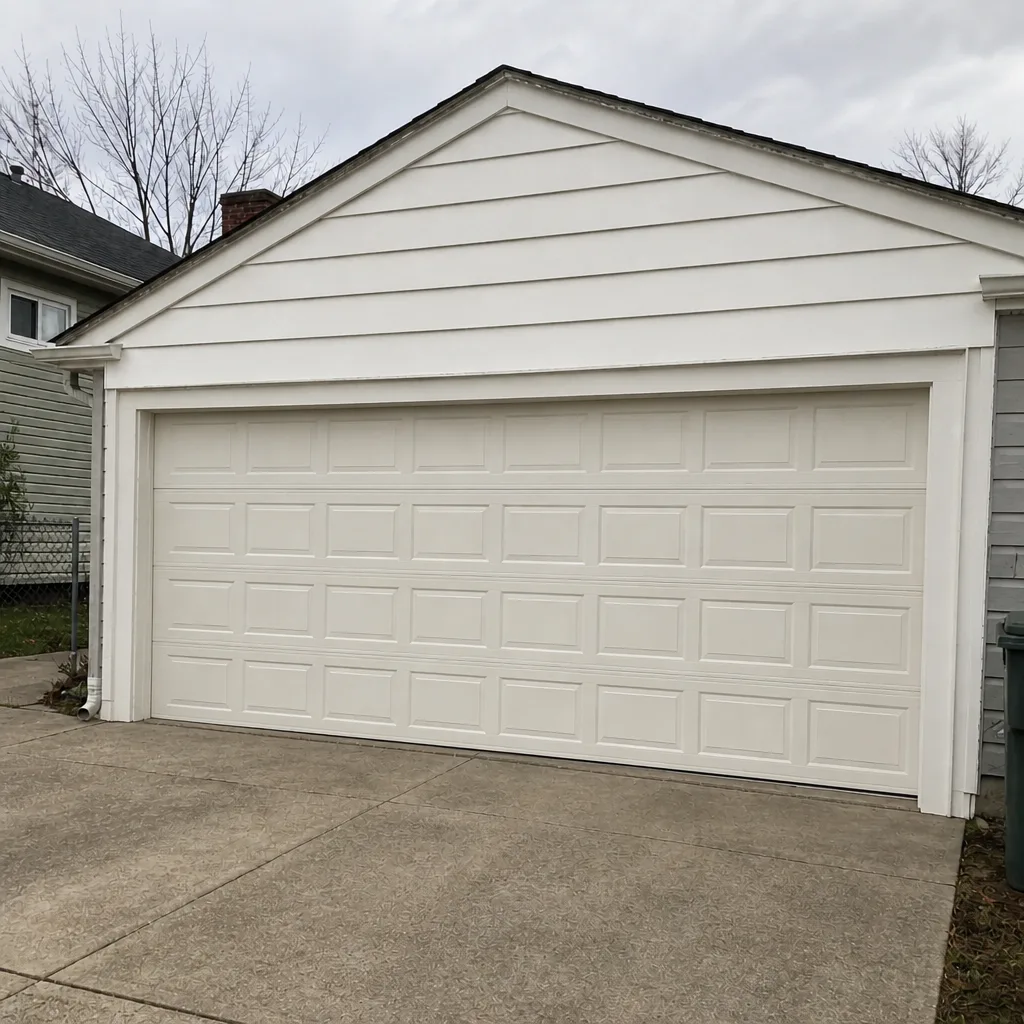
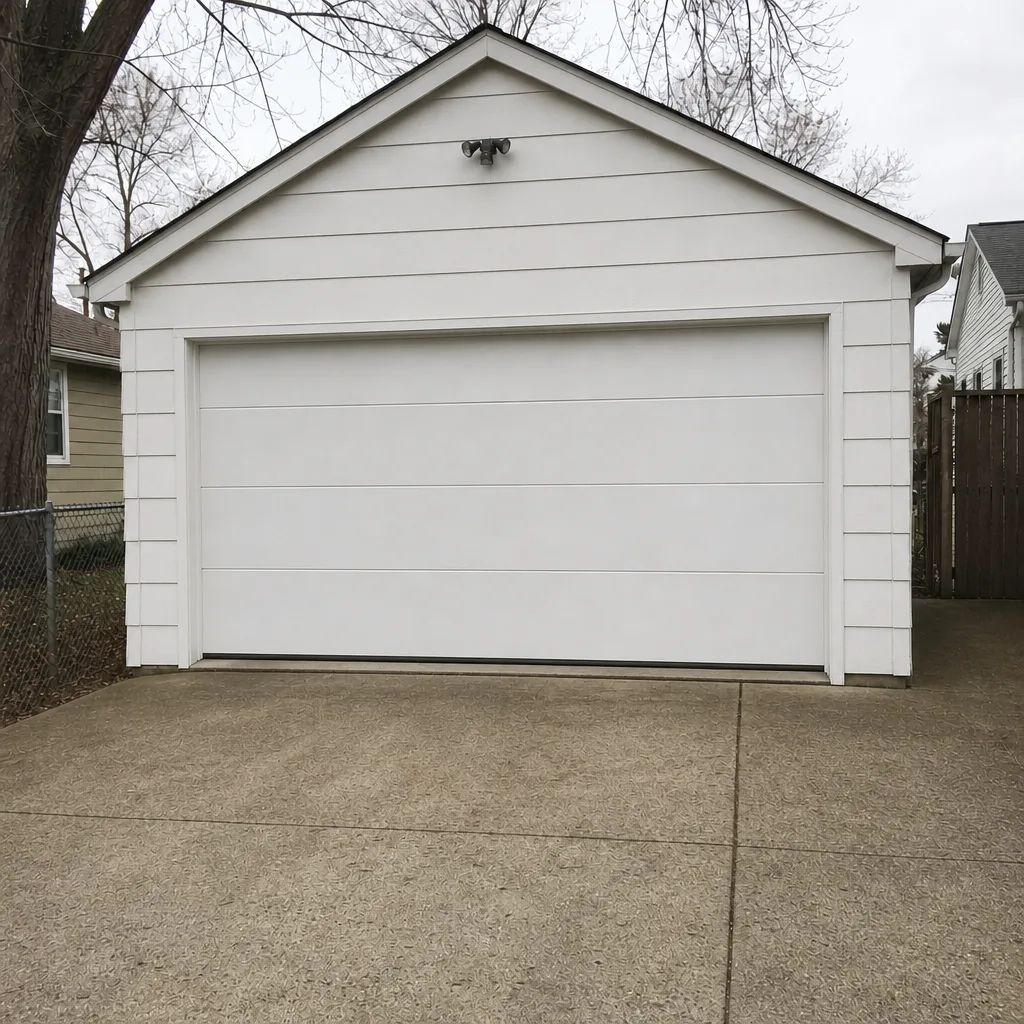
See the difference
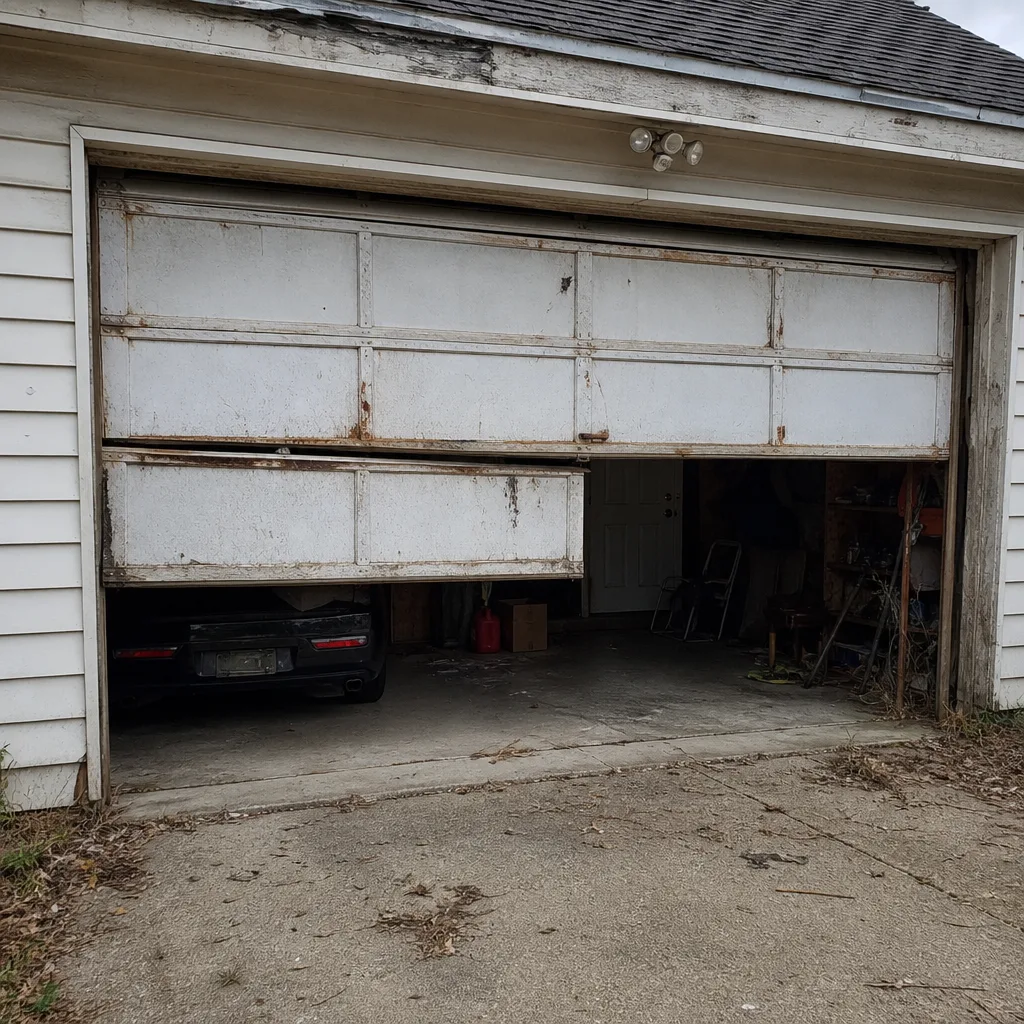 Before
 After
 Before
 After
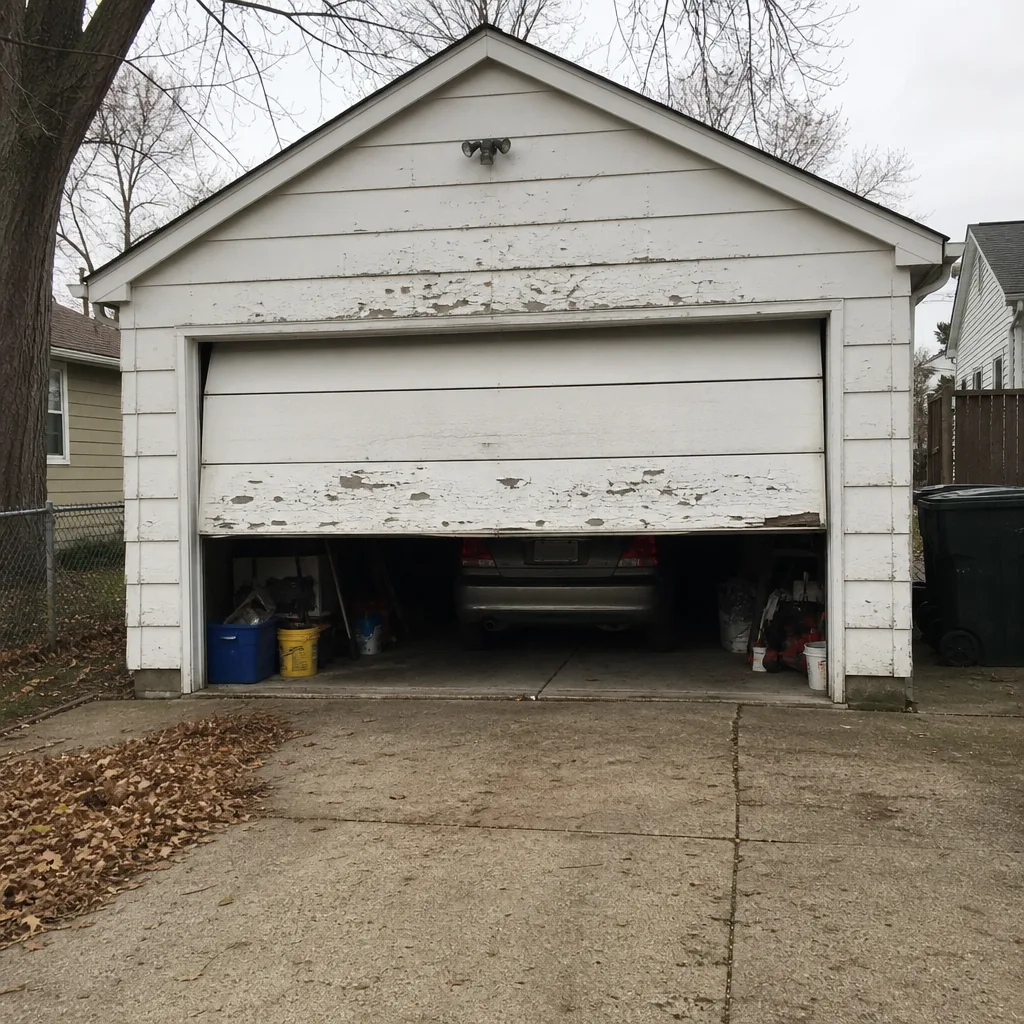 Before
 After
When to Call a Professional
Some garage door problems are safe to look at yourself and some aren’t. Call a professional when a spring has broken or is visibly stretched or unwound, when a cable is frayed or hanging loose, when the door has come off its track, or when the door closes unevenly or reverses without an obvious obstruction. Those are the situations where the hardware is under load and where an untrained repair can turn a fixable problem into an injury.
Also call when you’re planning new hardware on an older Lakewood garage and want to know whether the framing and jamb can take it. That assessment is the difference between a door that works for years and one that fights you from the start.
Channing Garage Door Repair offers free estimates in Lakewood. Call (833) 468-5586. We answer 24/7. Fast dispatch from 7am to 7pm, Sunday through Friday.
Frequently Asked Questions
Eight feet wide is more common here than the 9-foot standard, because much of the city’s housing went up between 1920 and 1960. Many openings also measure irregularly, so the only reliable answer is to measure your own opening at the inside jambs rather than assuming a size.
Yes, in most cases, provided the door is specified to your measured opening and the framing is checked first. Clopay and Amarr both offer sizing that accommodates narrower and irregular openings, and Wayne Dalton has lines suited to low-headroom detached garages. Call (833) 468-5586 for an exact quote – estimates are free.
Typically $180 to $340 for one torsion spring, with a matched pair running roughly twice that since the two springs are usually replaced together. The written estimate sets the final price and is agreed before any work starts. Call (833) 468-5586 for an exact quote – estimates are free.
No. The price is quoted and agreed before work begins, and if we find something mid-job that changes the scope, we stop and discuss it with you first. You won’t get an invoice larger than the quote you approved.
Often yes for repair work, including springs, cables and openers. We answer 24/7, and a call outside dispatch hours is booked into the next opening, Sunday through Friday, 7am to 7pm. For a new door, we schedule a free measure and written price rather than a same-day install. Call (833) 468-5586 for an exact quote – estimates are free.
The local professionals we connect you with are licensed and insured as their state requires. They work on all major brands including LiftMaster, Chamberlain, Genie, Clopay, Amarr, Wayne Dalton, Craftsman and Raynor, and our technicians have up to 13 years of experience.
The Bottom Line
Lakewood garages were built for a different set of assumptions than modern ones, and the work that gets them right starts with measuring and inspecting rather than assuming. An 8-foot opening is normal here, not a problem, as long as the door is specified to it. Detached garages need their ceiling framing and spring anchoring checked before new hardware goes up. Materials should be chosen for Lake Erie moisture and freeze-thaw, with the bottom seal treated as a maintenance item rather than an afterthought. And most failures are hardware failures, which means most doors have years of life left in them. Measure first, inspect the framing, and repair before replacing.
If you’d like a straight answer about your own garage, call us and we’ll take a look. Channing Garage Door Repair connects Lakewood homeowners with experienced local professionals who work on the brand you already have, for repair, opener work, spring repair, new installation and emergency calls. Garage door repair starts with a diagnosis; new doors start with a free measure. Call (833) 468-5586. We answer 24/7. Fast dispatch from 7am to 7pm, Sunday through Friday.
Written by the team at Channing Garage Door Repair.