
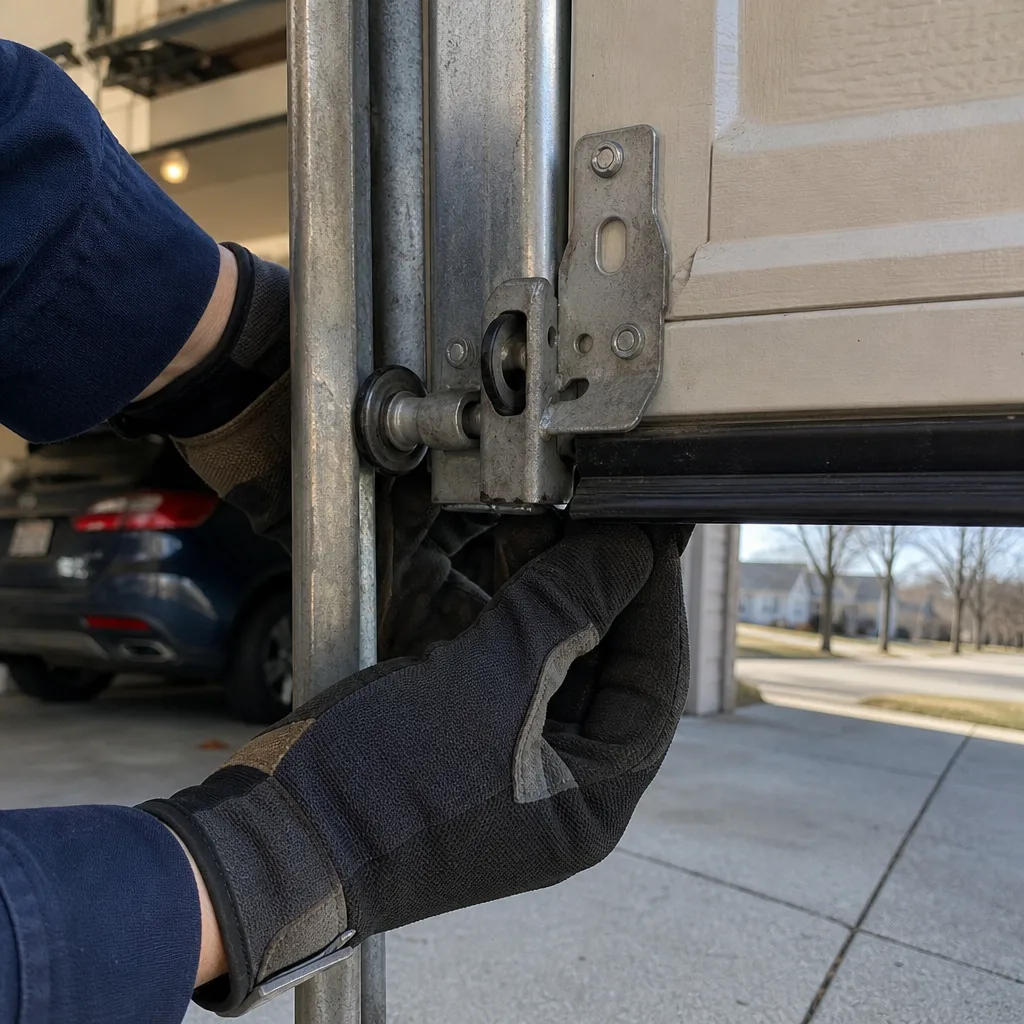
Last updated November 23, 2026
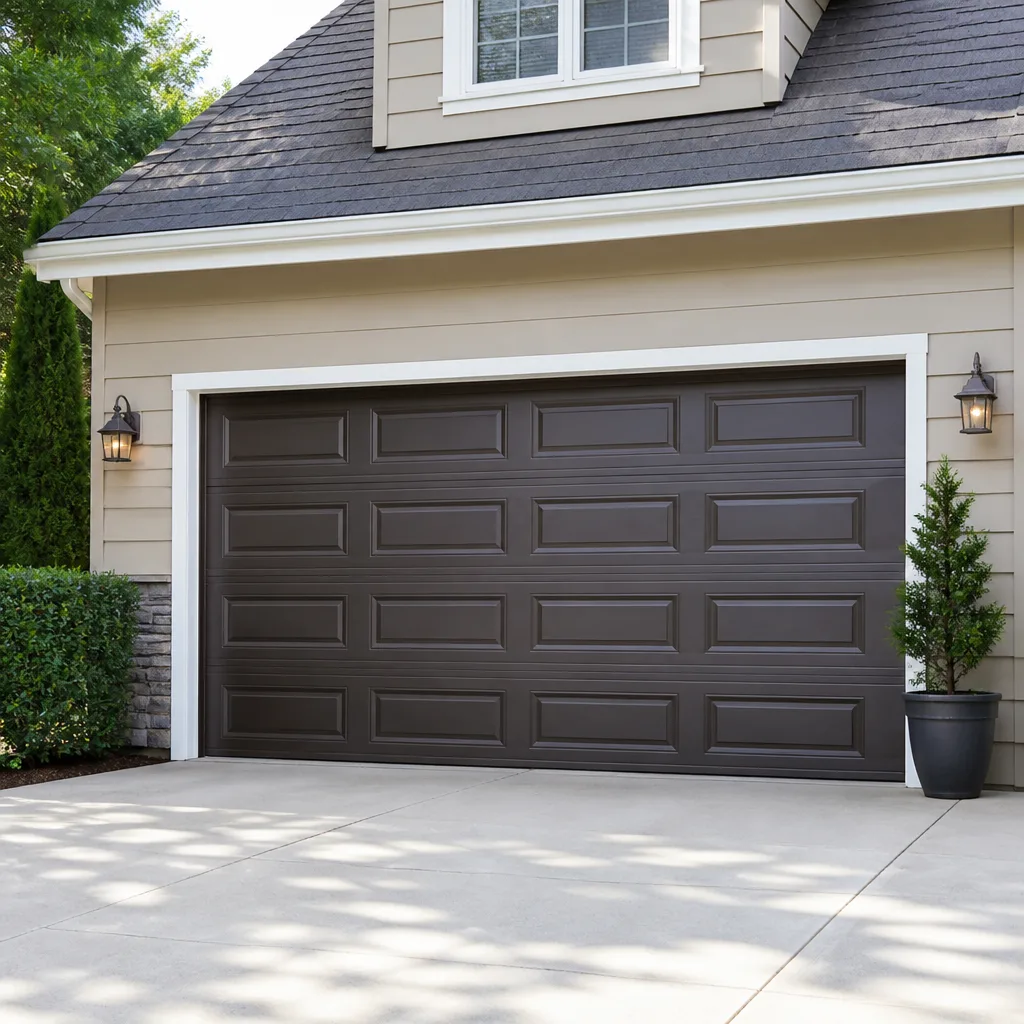 Raised-panel steel
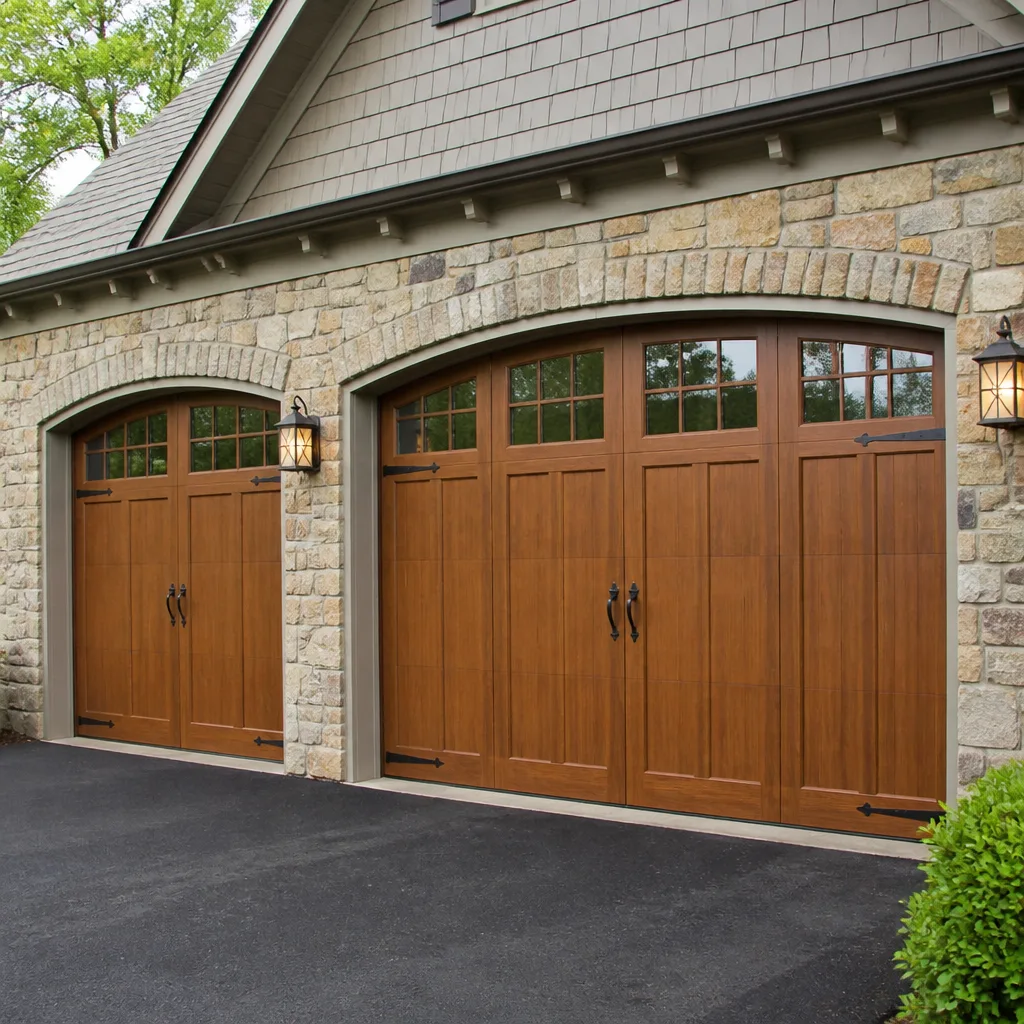 Carriage house
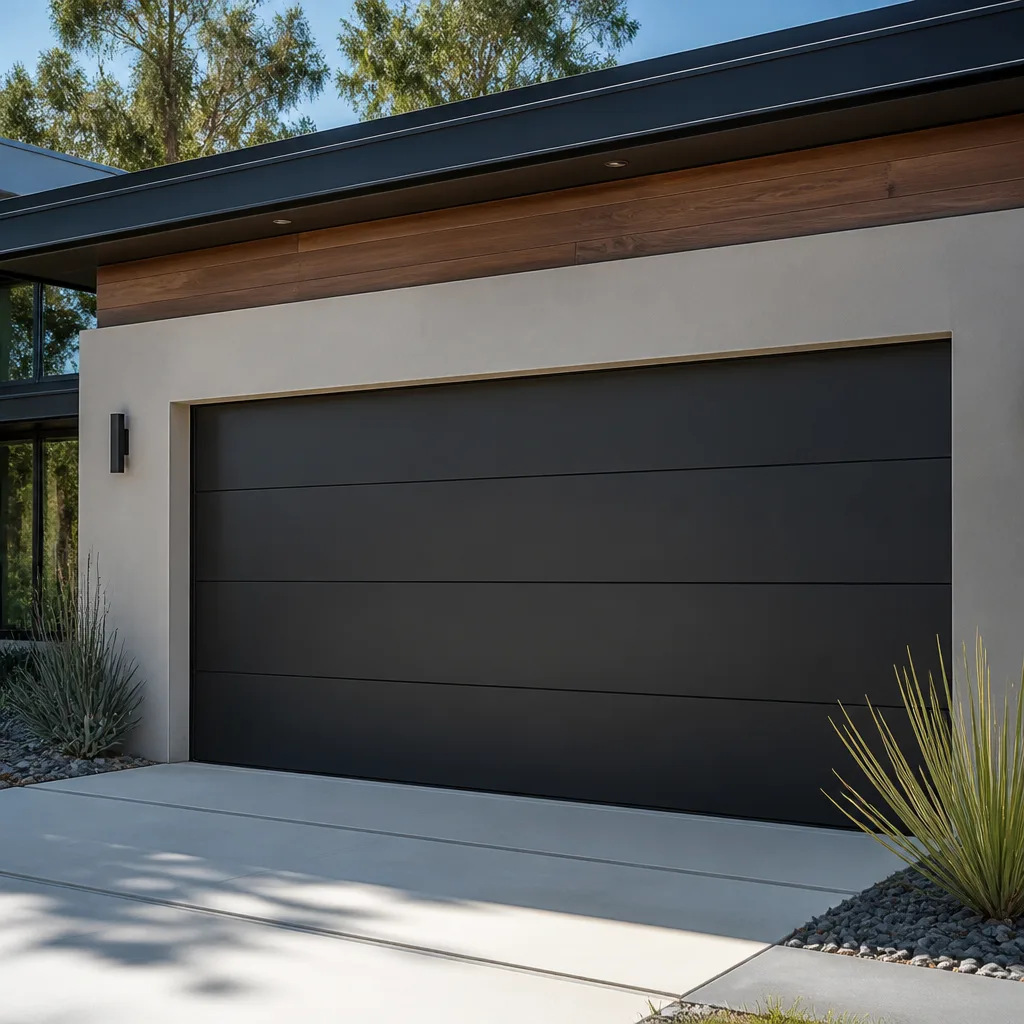 Modern flush
 Full-view glass
 LiftMaster openers
 Chamberlain openers
Full 25-point door and opener safety check with every visit - springs, cables, rollers, tracks, and your LiftMaster or Chamberlain opener included
You get a price before we start. It does not change when the pro arrives.
Get your free estimateDIY vs Professional Garage Door: The Lakewood Homeowner’s Decision Guide
Most homeowners ask the wrong question about garage door work. They ask “am I handy enough to do this?” when the real question is “which of these jobs can hurt me?” Those are very different things. Some garage door tasks are genuinely simple: lubricating hinges, wiping down sensors, reprogramming a remote. Others carry energy and weight that no amount of confidence prepares you for. A torsion spring under load holds enough stored force that a slip is measured in broken bones, not scraped knuckles. This guide breaks the repair list into what’s safe to handle yourself in Lakewood and what isn’t, how costs compare once you count tools, and where older local housing stock turns a simple swap into a structural decision.
Quick Answer
Of all garage door jobs, only a few are truly DIY-safe: lubrication, safety sensor alignment, remote and keypad programming, and visual inspections. Everything involving torsion or extension springs, cables, track replacement, or a door that has come off its rollers should go to a specialist. In Lakewood, older homes with non-standard framing make track work even less of a homeowner project, since the fix can involve reframing rather than swapping hardware. The rest of this guide shows you exactly where that line sits.
Styles & brands we work with
- Raised-panel steel
- Carriage house
- Modern flush
- Full-view glass
- LiftMaster openers
- Chamberlain openers
Table of Contents
- Where the DIY Line Actually Sits
- The Tasks That Are Genuinely DIY-Safe
- Why Torsion Spring Work Is Different
- DIY vs Professional: The Real Cost Comparison
- Opener Installation and Your Warranty
- Lakewood Housing and the Track Problem
- Common Mistakes to Avoid
- When to Call a Professional
Where the DIY Line Actually Sits
A garage door is a system of parts under tension, and the tension is what separates a five-minute job from a serious hazard. The honest dividing line isn’t about intelligence or experience with power tools. It’s about whether you can lose control of a part that stores energy.
Here’s how we sort the work in our own heads. If a task involves adjusting something that moves slowly or poking a sensor, you’re fine. If it involves a spring, a cable, or the alignment of a door that has left its track, that’s not a homeowner job. And if it involves drilling new anchoring points into a wall, structural judgment comes into play before the first hole is drilled.
Lakewood adds a wrinkle. Much of the housing here was built when doors and openings were cut to dimensions that don’t match today’s off-the-shelf hardware. A door opening you assume is standard may be an inch or two off, which turns a “swap a bracket” job into a “build a frame” job. Homeowners who buy replacement parts before measuring tend to find that out on their garage floor with the old track already in the recycling bin.
A simple test helps. Stand back and look at the task. If the answer to “what happens if this part lets go while I’m holding it” involves any part of your body, stop and call. That’s it. Everything below is just detail around that one rule.
For the tasks that fall on the professional side, our garage door repair service handles the diagnosis and the fix on-site in Lakewood, and it starts with an honest assessment of what actually failed, not a pitch for a new door.
The Tasks That Are Genuinely DIY-Safe
Plenty of garage door maintenance is easy, requires no special tools, and makes your door quieter and your opener happier. These are the jobs to keep on your own list:
- Lubrication. A garage door hinges, rollers, and tracks want a garage door or lithium spray lubricant, not cooking oil or WD-40. Rollers, hinges, and the torsion tube bearings take a short spray a couple of times a year. It’s quiet, harmless, and it slows wear.
- Safety sensor alignment. The two little lenses six inches off the floor on each side of the opening need to face each other. If the opener reverses for no reason, wipe both lenses and nudge the brackets until the indicator lights on both sensors glow steady.
- Remote and keypad programming. On most LiftMaster and Chamberlain units, pairing a remote means holding the learn button on the motor housing and pressing the remote within a window of a few seconds. The manual for your model walks you through it in one paragraph. No tools, no risk.
- Visual inspection. Once a month, run the door up and down and look and listen. Straining motor, uneven travel, a wobbling roller, fraying along a cable, a gap at the bottom seal – note it. Catching a small issue early is the cheapest repair there is.
- Cleaning and treating the weather seal. The rubber strip at the bottom takes dirt and grit. A wipe-down and a light silicone spray keeps it flexible and keeps water and cold air outside where they belong.
These are the tasks we’d tell a friend to do themselves without a second thought. They’re also the ones we never have a reason to charge anyone for, because a quick explanation over the phone usually covers it.
What’s not on this list: replacing rollers that have cracked or frozen. That sounds small, but roller plates sit under tension and the bottom bracket is under serious cable load. It’s a five-minute pro job and an unnecessary risk at home. We’ve written before about how often a “simple roller swap” ends up as a call for garage door opener repair after a bracket lets go mid-swap and the opener takes the hit.
Lubricating and inspecting is also the best way to spot the one failure that isn’t DIY: a spring that’s stretched, has a visible gap in the coil, or looks shiny where it used to be matte. That’s your cue to stop and call, and we cover why in the next section.
Why Torsion Spring Work Is Different
A torsion spring is a coiled steel rod holding the entire weight of the door every second it’s down, and holding the door back every second it’s up. That’s not a metaphor or a warning label. That’s the physics of the part, and it’s why spring work is the one category where even confident DIYers should put the tools down.
When a torsion spring is tightened during installation or replacement, it’s wound multiple full turns. The amount of energy stored in that coil is enough to snap a winding bar out of a gloved hand and spin it across the garage with force that dents a wall. When a spring fails, it usually does so with a bang because all that energy is released at once. That’s why a snapped spring sounds like a gunshot and why the door drops hard if the spring fails while it’s open.
Here’s what makes the YouTube-research route risky:
- The winding process demands the right tool. A proper winding bar is a solid steel rod made for the job. Substituting a screwdriver, a pipe, or a socket extension is how injuries happen. The tool alone costs more than a single spring repair in most cases, and that’s before you’ve touched the spring.
- There’s no margin for a slip. Experienced technicians treat spring winding as a deliberate, two-bar, count-your-turns process. There’s a reason. A single missed turn count or one mis-seated bar can change the load on the other bar in an instant.
- Matched pairs matter. Springs are rated by wire gauge, inside diameter, and length. When one fails, the other is usually near the end of its life. A pair is normally replaced together, and mixing a fresh spring with an older one leaves the door unevenly supported.
- Every door is weighed differently. The spring on your door is rated for your door’s weight. A swap with the wrong-rated spring can leave the door too heavy for the opener or pushing up with too much force – either way, something else fails next.
This is exactly the category where a real specialist earns the fee. We handle garage door spring repair as a core service, not an add-on, and it’s the task we most often get called in for after a homeowner has already started and stopped. If a spring has snapped, the door’s opener is straining to lift a door it can no longer support, and once that motor burns out, the repair list grows. The door isn’t going to fall on a passerby through a closed garage door, but it will come down fast and hard on anything under it, and an opener forced to lift an unsupported door is a dead motor on the schedule. We treat a snapped spring as urgent. We answer 24/7. Fast dispatch from 7am to 7pm.
DIY vs Professional: The Real Cost Comparison
DIY always looks cheaper when you only count the part. The number that matters includes the tool you need, the parts you may buy twice, and – for a spring job – the injury risk that no receipt captures. Here’s how a fair cost comparison runs for a typical Lakewood garage door job. All figures below are typical estimate ranges; the written estimate sets the final price.
| Task | Typical Pro Estimate | What DIY Needs |
|---|---|---|
| Torsion spring replacement (single spring) | $180 – $340 | Two winding bars, the correct spring, a winding count reference, and a spotter |
| Matched pair replacement | Roughly double the single-spring range | Same, plus matching both springs by wire gauge and length |
| Opener replacement (unit only, driveway-level) | $280 – $600 for the opener, plus install | Ladder, drill, hardware, and a clear read on your ceiling |
| Safety sensor replacement | $90 – $180 | Basic hand tools, if the wiring itself is fine |
| Roller replacement (per roller) | $15 – $30 | Correct-sized rollers, a bending tool, and cable caution |
| Full door replacement | $900 – $2,200 | Not a homeowner project |
| Lubrication and tune-up | $80 – $150 | A can of garage door lubricant and 20 minutes |
The math shifts once you price the winding bars. A proper pair of winding bars is not cheap, and you’d use them once. Even setting aside the injury risk, the tools alone can eat a meaningful share of what a spring repair costs, and you still own a set of bars you’ll never need again. On a full day’s worth of work – two springs, an opener, and a set of rollers – the DIY route rarely comes out ahead.
What a professional estimate buys is the part, the diagnosis, and the confidence the door is balanced and the opener is rated correctly for the new springs. It’s the check most DIY installs skip, and it’s the one that catches a door that’s about to fail again. Our technicians have up to 13 years of experience, and we write the estimate before any work begins, so the price is agreed up front rather than discovered at the end.
Opener Installation and Your Warranty
Installing your own opener is where DIY gets expensive without your ever touching a spring. On LiftMaster and Chamberlain units, the manufacturer’s warranty has conditions, and one of the most common is that the specified clearance and mounting method apply. Cut or drill the rail housing to fit a low ceiling, or mount the header bracket into material that doesn’t hold, and you’ve given the warranty a reason to be declined if the motor or logic board later fails. The manual tells you exactly what’s required. The shortcut is what voids it.
There’s a second issue: opener installation involves the door as much as the ceiling. A new opener has a force setting and a travel limit that has to match how your specific door moves. Set the force limit too high to compensate for a stiff door and you’ve removed the safety valve that stops the opener from crushing something in the door’s path. Set it too low and the door reverses halfway up. The manual has a procedure, but it assumes a door in good mechanical health. If your rollers are frozen or a cable is frayed, dialing in a new opener just hides the real problem.
If you’re replacing an older unit, the brands we see most in Lakewood garages are Craftsman and Raynor, and both have quirks: older Craftsman head units often have a specific learn sequence, and Raynor doors sometimes have opener brackets that need re-positioning rather than a drop-in swap. That’s one reason we work with the brand you already have. A Craftsman or Raynor opener from twenty years ago is not a reason to replace the whole door. It’s a reason to have someone who knows the model look at it.
New opener installs aren’t a same-day emergency job, and they shouldn’t be. We measure, quote, and schedule, then test the safety reverse before we leave. The written price is set before the install, not after.
Lakewood Housing and the Track Problem
Lakewood’s housing stock is old, and old garages don’t come with standard framing. Many of the homes here were built when the garage was a modest add-on, and the studs, headers, and door openings reflect whatever the builder had on hand. That’s fine for a door that’s lived in that opening for decades. It’s not fine when a door comes off its track and a homeowner reads that the fix is “rehang the track.”
In a newer house, rehanging track is usually a matter of bolting new hardware to framing that’s already square. In Lakewood, it can mean finding that the framing wasn’t square to begin with, or that the header is carrying more than a track bracket should ask of it. That makes track work a structural decision, not a hardware swap. This is also true of a new door install: the door won’t hang true on a crooked opening, and a technician who can spot that before installation day saves you a long afternoon.
There’s a climate angle too. Lakewood winters bring temperature swings, and a door with a badly sealed bottom edge will let snowmelt and cold air in. That’s a garage-floor and seal problem, not a door structure problem, but it’s a good reason to keep the bottom seal in shape and the springs checked before the cold sets in. A door that creaks more in January than it did in October is a door starting to tell you something.
Building code rules vary by municipality, so if you’re planning a track rehang or a new door install, ask the city’s building department whether a permit applies to your project. We’d rather you ask than assume, and any licensed local professional doing the work should be able to confirm the same. For structural questions, the answer is to have a specialist look first, and that’s free to ask about.
Common Mistakes to Avoid
- Buying the spring before measuring it. Springs are rated by wire gauge, inside diameter, and length, and a spring the wrong size for your door loads the opener unevenly and fails early. Measure first, and have a specialist confirm the rating.
- Substituting a tool for a winding bar. A screwdriver or a socket extension is not built to hold a wound torsion spring. The cost of the right tool is small compared to a trip to the emergency room.
- Treating a snapped spring as an “I’ll get to it.” Leaving the opener to lift a door with no spring support accelerates motor wear and can damage the opener’s gear assembly. Book the repair and leave the door closed.
- Assuming every old garage in Lakewood has standard framing. Much of the local housing stock was built to no consistent opening dimension, and drilling into a questionable header can weaken the very structure the track depends on.
- Cutting or modifying an opener rail to fit a low ceiling. That’s one of the fastest ways to have a LiftMaster or Chamberlain warranty declined on a motor or board failure.
- Fiddling with a cable under load. If the wire rope is frayed or has jumped a drum, stop. Cables can whip when tension releases, and the fix requires proper clamps and knowing exactly how much tension the system carries.
- Skipping the monthly run test. A wobbling door, a straining opener, or a reversing sensor are cheap to fix early and expensive to fix after they cascade into spring or cable damage.
Each of these mistakes is a reason the case for a specialist keeps coming up. It’s also why we lean so hard on diagnosis as Channing Garage Door Repair‘s first step, and why “it’s only a spring” rarely turns out that way in Lakewood.
When to Call a Professional
If you’re looking at a snapped spring, a door off the track, a frayed or popped cable, a door that reverses for no reason, or an opener that groans and struggles, call. These are the situations where the cost of a wrong guess goes up quickly. The same goes for any door you can’t lift by hand with reasonable effort – that means the system is out of balance, and the balance point is spring territory.
For emergencies, we answer 24/7. Fast dispatch from 7am to 7pm. If your door is stuck open with the house exposed, or a spring has snapped and you can’t safely close the door, that’s the call to make first. Channing Garage Door Repair offers free estimates in Lakewood – call (833) 468-5586. The price is set by the written estimate and agreed before any work starts. We give you a straight answer about whether the door can be repaired or needs replacement, and we don’t oversell the replacement.
See the difference
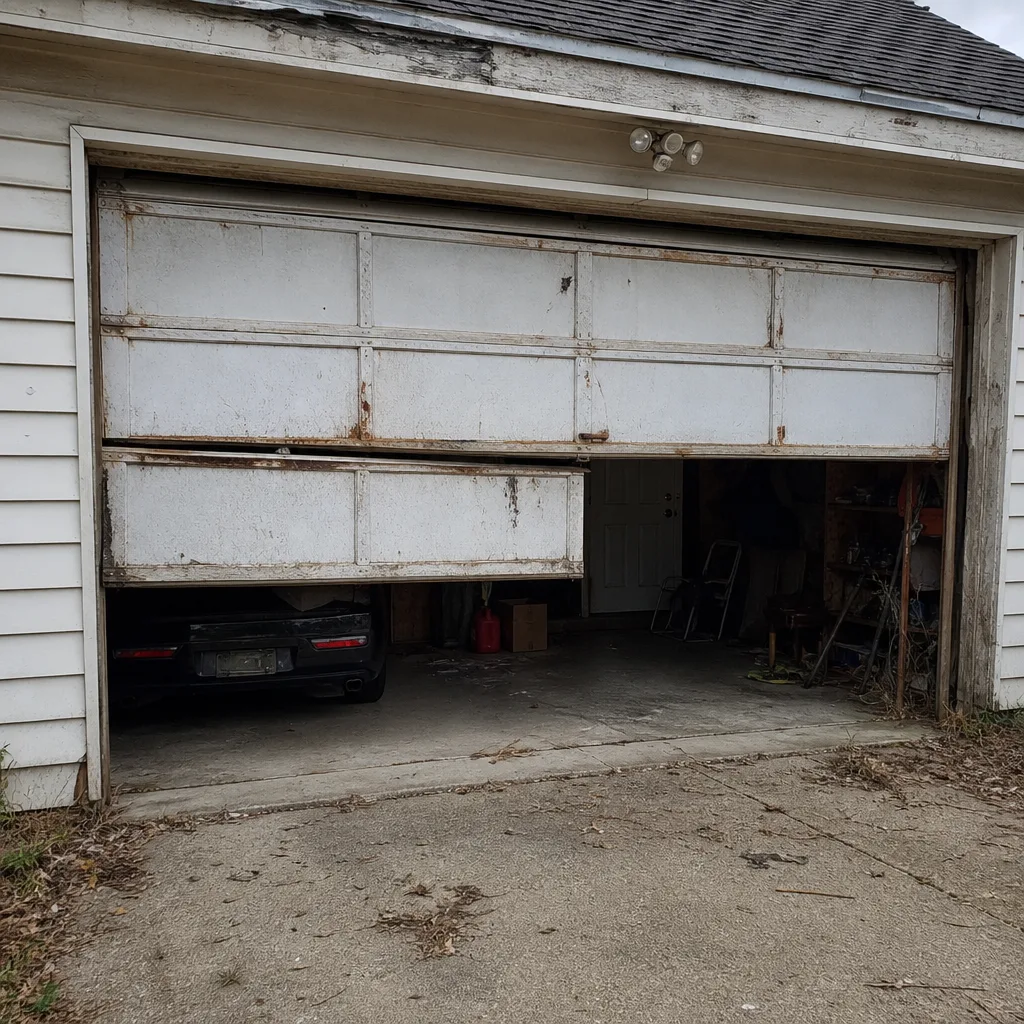 Before
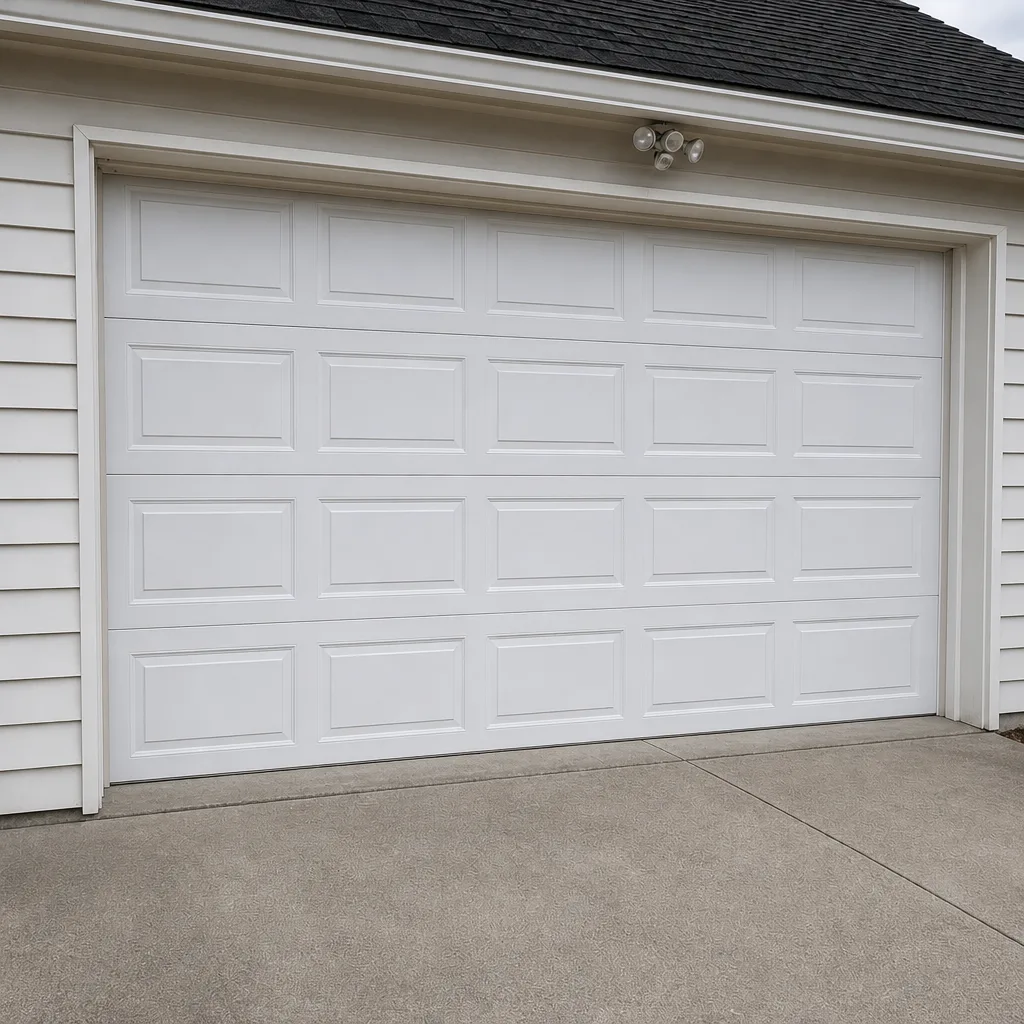 After
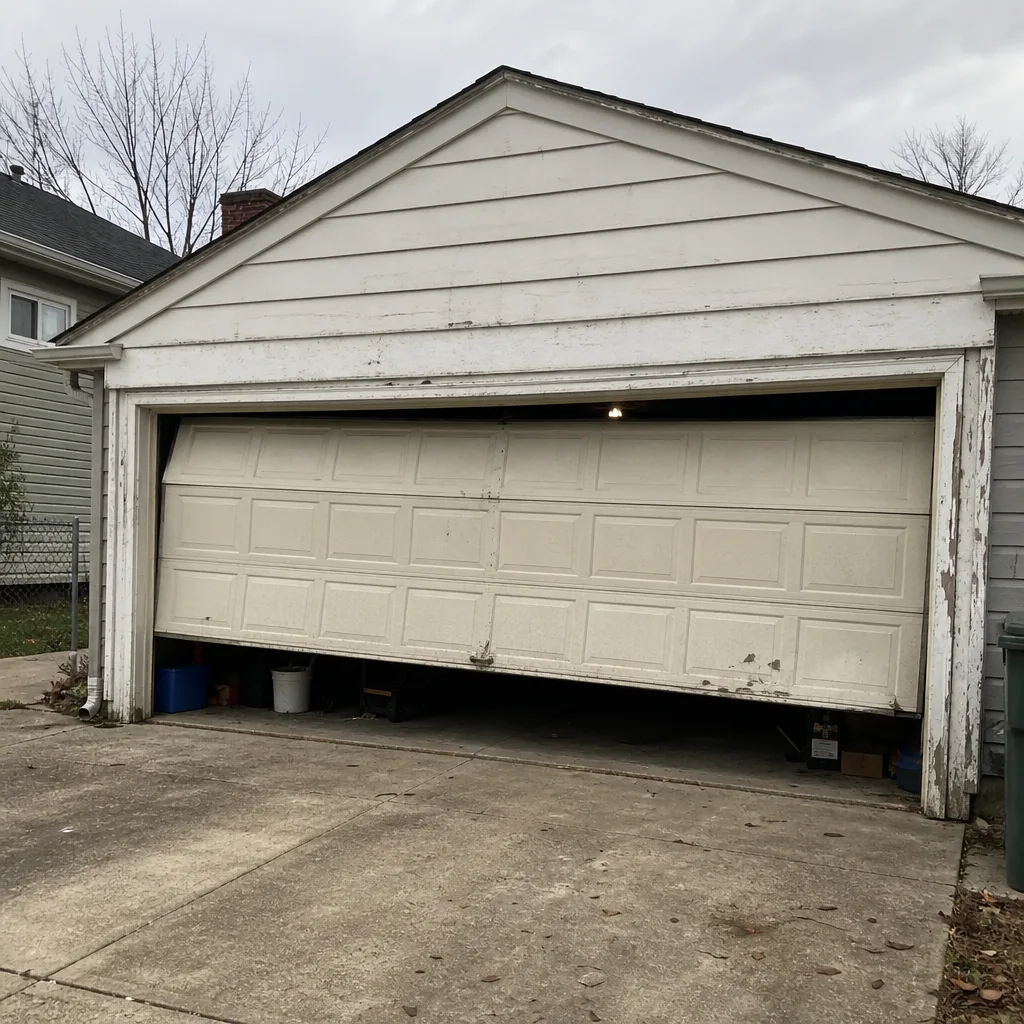 Before
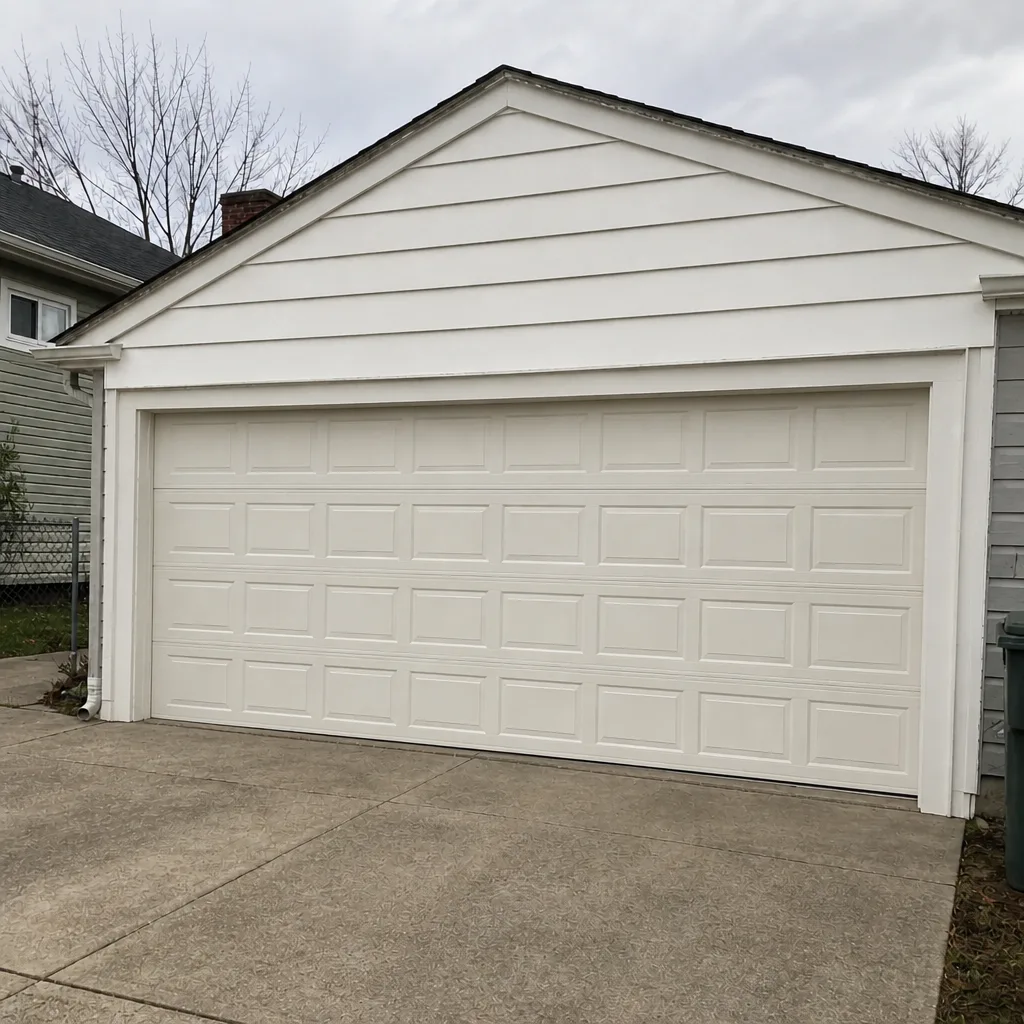 After
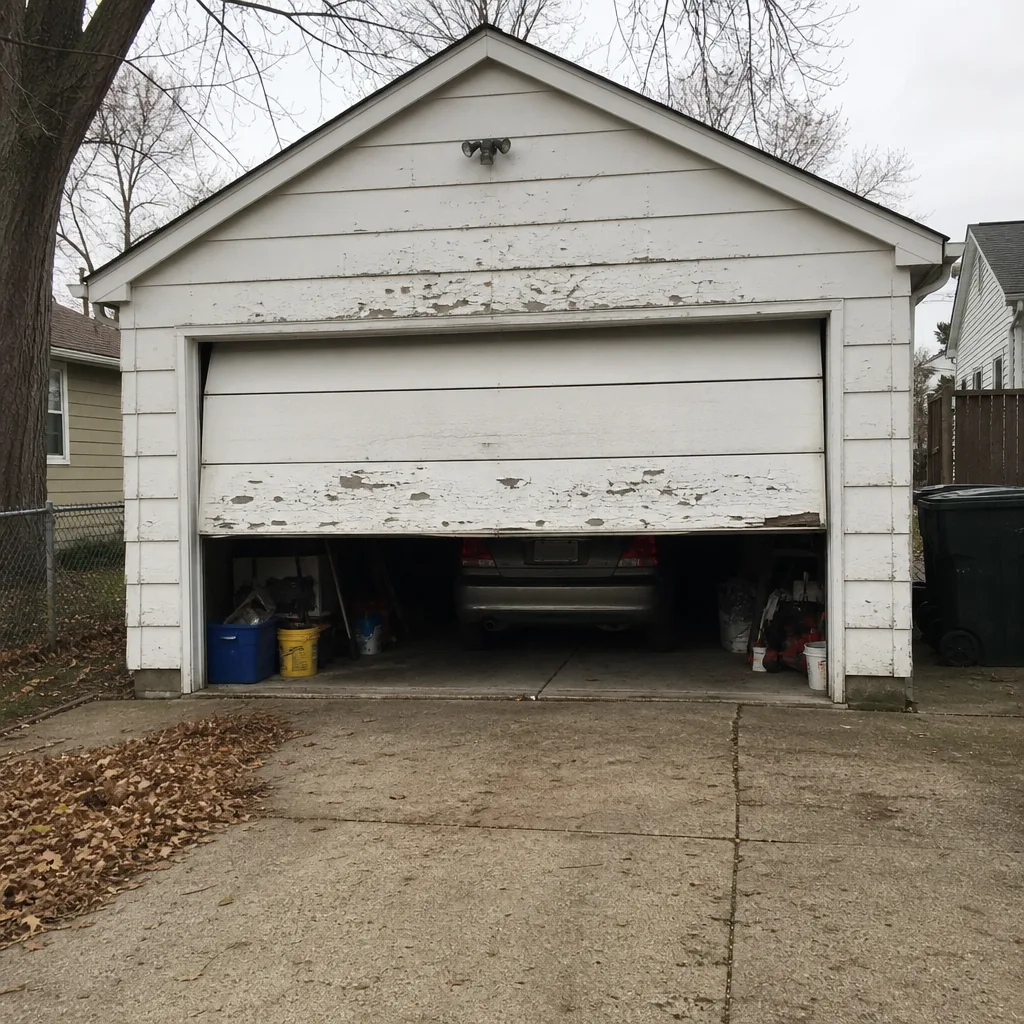 Before
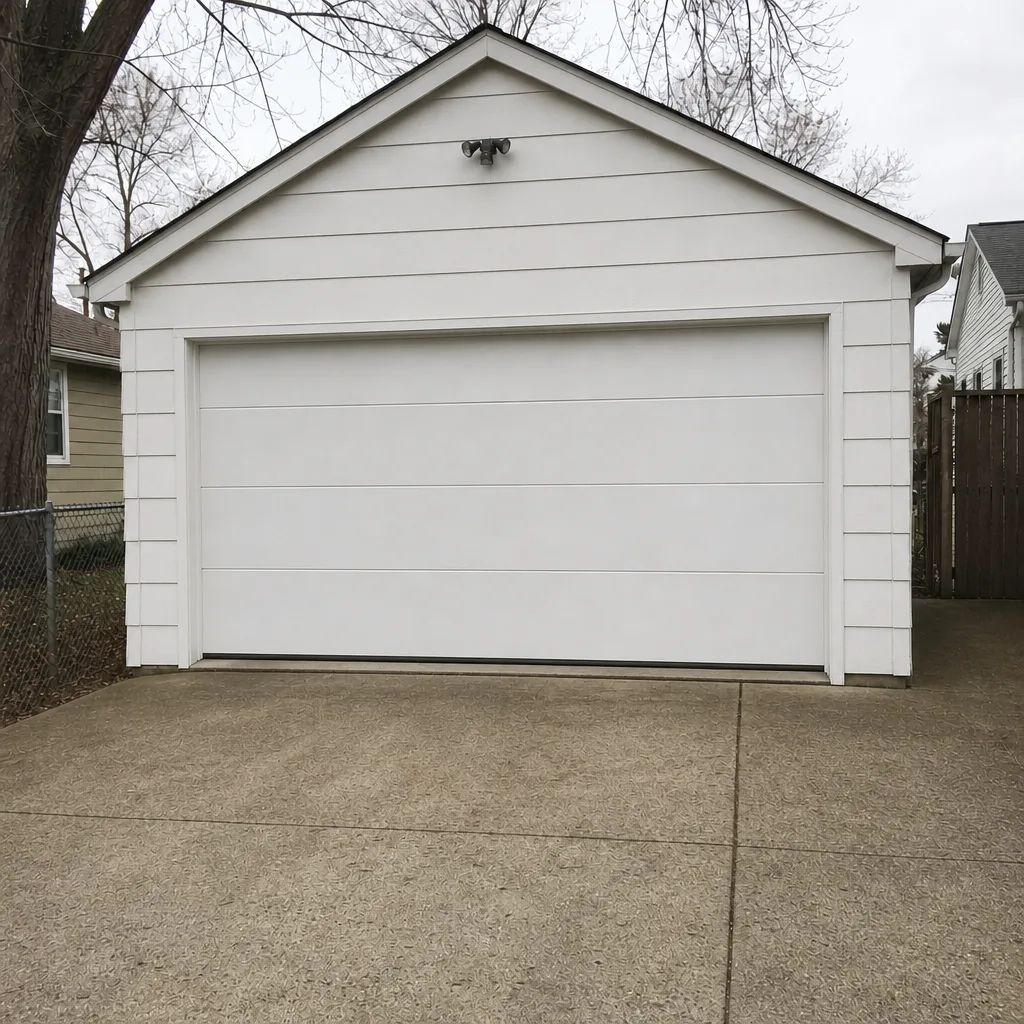 After
Frequently Asked Questions
No. Torsion spring replacement is the one garage door job we never recommend to a homeowner, because a wound spring stores enough force to break bones if a winding bar slips. The job also needs the correct spring rating and a matched pair, so the risk and the failure rate both run high. Call us for spring work: (833) 468-5586. Estimates are free.
Typical estimates for a single torsion spring replacement in the Lakewood area run $180 – $340, and a matched pair usually costs about twice that. We replace a pair together because the second spring is usually as worn as the one that broke. Call (833) 468-5586 for a written estimate – it’s free and the price is agreed before any work begins.
An improper installation can. Both brands have warranty terms that assume the specified mounting and clearance methods were followed, and cutting or modifying the rail to fit a low ceiling is one common way installers lose coverage on a motor or board failure. We install and service both brands and test the safety reverse before we leave. Call (833) 468-5586 for a free estimate.
Lubrication, safety sensor alignment, remote and keypad programming, visual inspections, and wiping down the bottom seal. Those are all safe and genuinely save you money over time. Anything involving springs, cables, track adjustments, or rollers under load is a professional job. If you’re not sure which side a task falls on, call us and we’ll tell you over the phone.
For repair and emergency work, often yes. We answer 24/7 and fast dispatch runs from 7am to 7pm, Sunday through Friday. A new door installation or a full opener replacement is measured, quoted, and scheduled instead, since it depends on parts order and on how the opening measures out. Call (833) 468-5586 and we’ll tell you which kind of job you’re looking at.
The local pro is licensed and insured as their state requires, and every job is quoted in writing before work starts. Our technicians have up to 13 years of experience, and we service the brand you already have rather than pushing a replacement. Call (833) 468-5586 for a free estimate, and if a spring repair or opener issue is urgent, call now. We answer 24/7.
The Bottom Line
The DIY decision on a garage door is simpler than most homeowners expect. Lubricate, inspect, align sensors, and program remotes yourself – those tasks are safe, cheap, and worth doing. Everything else on the list, especially the springs, cables, and track, belongs to a specialist with the right tools and the training to use them. Lakewood’s older housing stock makes that line even sharper, because a track fix here is often a framing question first. Get the estimate in writing, agree the price, and let a specialist handle the risk. Do your part, hand off the rest, and keep the door moving smoothly through every Lakewood winter.
Call (833) 468-5586 for a free estimate. We answer 24/7. Fast dispatch from 7am to 7pm, Sunday through Friday.
Written by the team at Channing Garage Door Repair.